
Project Hail Mary: Ryan Gosling, Rocky, and How to Watch the Best Sci-Fi Film of 2026
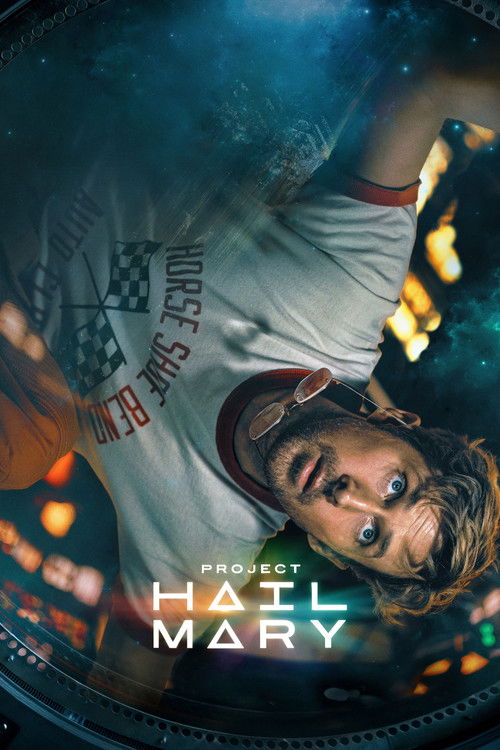
Project Hail Mary is the best science fiction film anyone has made in years, and if you haven’t seen it yet, this guide is what gets you there. Ryan Gosling plays Ryland Grace, a junior high school science teacher who wakes up alone on a spacecraft millions of miles from Earth with no memory of who he is, why he’s there, or what happened to the two crew members who were supposed to be with him. What follows is the most compelling solo performance since Tom Hanks talked to a volleyball, combined with one of the most genuinely moving alien encounter stories ever put on screen. Project Hail Mary arrived in March 2026 to audience scores that place it among the best-received films of the decade. This guide covers everything: what the film is actually about without ruining it, Ryan Gosling’s performance, where to watch it, and the smartest way to access it from anywhere in the world.
What Is Project Hail Mary? The Novel That Became the Year’s Best Film
Project Hail Mary is adapted from Andy Weir’s 2021 bestselling novel of the same name. Weir wrote The Martian, which became the 2015 Ridley Scott film starring Matt Damon. Project Hail Mary is widely considered the better book: more ambitious, more emotionally complicated, and built around a central relationship that nobody who has read it has ever forgotten. The film had a long road to the screen. Amazon Studios acquired the rights shortly after the novel’s publication. Directed by Phil Lord and Christopher Miller, the adaptation was one of the most anticipated projects in Hollywood for three years running.
The story belongs to Ryland Grace, a man who has to save the world while not entirely remembering that he volunteered to do so. Project Hail Mary isn’t a film about rockets and explosions. It’s a film about curiosity, about what humans owe each other, and about what connection actually means when the two parties doing the connecting are as different as it’s biologically possible to be. The 8.21 audience score it currently holds reflects exactly that. This is not a film that wins on spectacle alone. It wins because it’s smart and because it makes you care.
Andy Weir’s novels are built on real science. Project Hail Mary the book was praised by physicists for its accuracy on topics ranging from astrophysics to microbiology. The film carries that commitment forward. The science in Project Hail Mary is not background noise. It’s the plot engine. When Ryland Grace solves a problem in the film, he solves it the way a scientist actually would, by forming a hypothesis, testing it, failing, adjusting, and testing again. In an era of films where science is primarily used as decoration, that approach is genuinely unusual.
The Plot of Project Hail Mary: What Happens Without the Spoilers
The premise of Project Hail Mary is deceptively simple: the sun is dying. Not in the way it will naturally die billions of years from now. It’s dying now, in decades, because of a microscopic organism called Astrophage that feeds on solar energy and is reproducing inside the sun itself. Earth will become uninhabitable within a human generation unless someone figures out how to stop it. The problem is that Astrophage exists at every star in the sky except one. Something at Tau Ceti, a nearby star, keeps its star clear. The mission is to find out what that something is.
Ryland Grace Wakes Up Alone
Project Hail Mary opens with Grace regaining consciousness in a ship he doesn’t recognize, unable to move, unable to remember his own name. His crewmates are dead. The ship’s AI is taking care of him while his body recovers from the extended cryosleep that brought him here. His memory returns in fragments across the film’s first act, intercut with flashback sequences that explain how he ended up on a one-way trip to another star with two people he barely knew. The structure is disorienting in exactly the right way. You’re as confused as Grace is, and you piece the mission together at the same pace he does.
This structural choice is one of Project Hail Mary’s most effective moves. The mystery of what happened, how Grace ended up here, and what he’s supposed to do gives the film’s first act the quality of a thriller even before the science takes over. Ryan Gosling sells every moment of that disorientation without overdoing it. The performance is controlled and specific in a way that earns the emotional weight the film needs later.
The Mission Nobody Volunteered For
As Grace’s memory returns, Project Hail Mary reveals the political and human story behind the mission. The Hail Mary project is Earth’s last bet. A spaceship built in secret, crewed by volunteers or near-volunteers, sent to Tau Ceti to find whatever is keeping that star clear of Astrophage. The mission is one-way. The trip takes years. The people who went knew they weren’t coming back. Grace’s path to the ship involves decisions made under impossible pressure by people who believed they were saving the human race, and not everyone agreed with those decisions. The flashback structure gives the film moral complexity that most science fiction skips entirely.
Rocky: The Alien That Changes Everything
The moment Project Hail Mary becomes something genuinely extraordinary is when Grace discovers he’s not alone in this part of the galaxy. Another ship has arrived at Tau Ceti for exactly the same reason. That ship is crewed by an alien named Rocky, whose people are dealing with the same Astrophage problem at their own star. Rocky is a spider-like creature, pentaradially symmetric, with five limbs and a body built around a crystalline structure. Rocky communicates through sound rather than vision, which creates an immediate language barrier that becomes one of the film’s most inventive running threads.
The friendship between Grace and Rocky is the core of Project Hail Mary and the reason the film hits as hard as it does. They have nothing in common. They can barely communicate. Their biology is so different that being in the same space is genuinely dangerous for both of them. And none of that matters. They are two scientists from different solar systems trying to solve the same problem, and the film finds extraordinary warmth in that shared purpose. The CGI work on Rocky is some of the best creature design committed to film in the last decade. Rocky doesn’t look like a movie monster. Rocky looks like an alien who thinks and feels and has opinions about things.
Ryan Gosling as Ryland Grace: The Performance of His Career
Project Hail Mary gave Ryan Gosling a role that required him to carry most of a film alone and then share it with a CGI creation that hadn’t been built yet when he was shooting his scenes. The technical challenge of that alone is significant. Gosling plays opposite tennis balls and digital markers on set, yet every scene with Rocky lands emotionally because he makes the relationship feel real from his end. The commitment in the performance is total.
What makes Gosling’s work in Project Hail Mary remarkable is how much he suppresses. Grace is a man who processes everything through curiosity rather than panic. When he discovers something terrifying, his first instinct is to run an experiment. Gosling plays that quality not as a character flaw or comic relief but as a genuine mode of coping, a man so at home in scientific process that it becomes his emotional anchor under the most extreme conditions imaginable. It’s a quiet performance in a loud situation, and the restraint is what makes the moments of genuine feeling hit so hard when they arrive.
Critics and audiences have placed this performance alongside Gosling’s work in Drive and Half Nelson as the defining entries in his career. After the global phenomenon of Barbie, there were questions about whether he could carry a film that was entirely his own without the support of an ensemble and a franchise. Project Hail Mary answers those questions decisively. This is one of the best lead performances in a science fiction film since Sandra Bullock in Gravity.
The Full Cast of Project Hail Mary
Project Hail Mary is structured around Gosling’s solo performance and the Rocky relationship, but the supporting cast in the Earth-set flashback sequences is strong and serves the film’s emotional architecture.
Ryan Gosling as Ryland Grace
Grace is a junior high school science teacher who specialized in extremophiles before being recruited into the Hail Mary project because of a paper he wrote about life surviving in extreme conditions. He’s not a hero in any traditional sense. He’s a curious, slightly awkward man who happens to have exactly the right knowledge set for the only mission that matters. Gosling plays him as someone who discovered his purpose by accident and is still a little surprised it turned out to be him.
Rocky (Voice and Motion Capture)
Rocky is a fully digital creation, a pentaradially symmetric alien from the Eridani system whose people call themselves the Eridians. Rocky communicates through modulated sound, eventually developing a shared language with Grace that blends human and Eridian speech. The character required an entirely new approach to CGI creature design, one that had to convey complex emotion through a body that has no face in any human sense. The character’s visual and emotional success is one of the film’s most significant achievements.
The Hail Mary Project Team (Flashback Cast)
The Earth-set sequences involve the scientists and strategists who designed the Hail Mary mission. These characters appear primarily in flashback and provide the moral weight behind the mission’s brutal logic. The casting in these sequences is strong, with several well-known faces filling roles that require conveying enormous responsibility in limited screen time. These characters humanize the bureaucracy of trying to save the world, and the film is smart enough to show that saving the world doesn’t require the people doing it to be good or kind or even willing.
Where to Watch Project Hail Mary: Every Streaming Option Explained
Project Hail Mary is an Amazon Studios production and streams exclusively on Amazon Prime Video following its theatrical release window. Here’s what you need to know about every viewing option.
Theaters: The Optimal First Viewing
Project Hail Mary opened theatrically on March 15, 2026. For viewers still within driving distance of a theater showing it, the theatrical experience is worth the trip. The film’s space sequences, the visual design of Rocky, and several key moments in the second half are built for a large screen. The sound design in Project Hail Mary is exceptional, and cinema audio does things with Rocky’s communication method that no home sound system fully replicates. If the film is still playing near you, go.
Amazon Prime Video: Where to Stream Project Hail Mary
Amazon Studios productions go to Amazon Prime Video after the theatrical window closes. Project Hail Mary is now available to stream on Prime Video in the United States, United Kingdom, Germany, Australia, and most major markets globally. The film streams at up to 4K HDR with Dolby Atmos audio on supported devices. At the 4K level with good audio, Project Hail Mary is one of the best-looking films you can stream on any platform right now. The visual detail in Rocky’s design, in particular, rewards full resolution.
Amazon Prime membership costs $14.99 per month in the United States, £8.99 in the United Kingdom, and varies by country across the rest of the world. All Prime memberships include the full Prime Video library. Project Hail Mary is included in that library at no extra charge.
The Regional Access Problem for International Viewers
Here’s the practical complication. Amazon Prime Video’s library is not identical in every country. What’s available on Prime in the US is not necessarily available in the same form in Morocco, Indonesia, Nigeria, or dozens of other markets where Prime exists but content licensing is structured differently. Some regions get Project Hail Mary from day one of the streaming release. Others face delays of weeks or months. Some regional Prime libraries don’t carry the film at all due to distribution arrangements made separately from the Prime library deal.
According to JustWatch, which tracks streaming availability across markets in real time, Project Hail Mary’s Prime Video availability varies significantly outside the core markets. For viewers who fall into those gaps, the options are to wait for regional availability, use a digital rental platform, or consolidate through a service that aggregates streaming content without regional walls.
TOP IPTV STREAM, available at topiptvstream.com, carries Amazon Prime Video feeds alongside 15,000+ live channels and on-demand content through a single subscription. Subscribers in any region get access to the same content library without the geographic fragmentation that makes streaming management so frustrating when you’re trying to watch one specific film you can’t find in your local catalog. One subscription, one app, no regional explanations required.
Digital Rental and Purchase
Project Hail Mary is also available for digital rental and purchase on Apple TV, Google Play, Amazon Video, Vudu, and similar platforms. Rental pricing sits around $5 to $6. Digital purchase is typically available at $14.99 to $19.99 depending on whether you choose standard or 4K. For a film you’ll only watch once, rental is perfectly reasonable. For a film like Project Hail Mary, which rewards rewatching and is the kind of thing you’ll want to show other people, purchase is worth the premium.
Streaming Comparison: How to Watch Project Hail Mary
| Platform | Project Hail Mary Access | Monthly Cost | 4K Available | Global Access | Other Content |
|---|---|---|---|---|---|
| Amazon Prime Video | Full stream, included | $14.99 (US) / £8.99 (UK) | Yes | Major markets only | Full Prime library |
| Apple TV / Google Play | Rental or purchase only | Pay per title | Yes (purchase) | Varies by region | N/A |
| Vudu / Fandango | Rental or purchase only | Pay per title | Yes (4K purchase) | US only | N/A |
| TOP IPTV STREAM | Amazon feeds + full VOD | From $15/mo | Yes | Yes — global, no restrictions | 15,000+ channels, sports, series |
Why Project Hail Mary Is the Best Sci-Fi Film of 2026
Project Hail Mary sits at 8.21 on TMDB as of May 2026, which places it in the top tier of science fiction films made in the last decade. That score reflects something real about how the film lands with audiences who come to it cold and audiences who have loved the book for five years. Both groups seem to leave satisfied, which is rarer than it should be for literary adaptations. Here’s what actually makes it work.
The Science Is Real and It Matters
Andy Weir builds his stories around scientifically plausible premises and then follows the implications honestly. Project Hail Mary’s premise, that a microorganism could consume stellar energy and reproduce inside a star, is speculative but not absurd. The film uses that premise to set up problems that have real scientific solutions rather than hand-waved ones. When Grace identifies the Astrophage metabolism, he does it through chemistry. When he and Rocky design a solution to the problem they find at Tau Ceti, the solution has internal logic that actual scientists have praised.
This matters for the audience experience in a way that’s hard to quantify but easy to feel. Films where the science is obviously fake create a low-grade friction that pulls viewers out of the story. Project Hail Mary doesn’t have that friction. The science feels like the actual rules of the universe the characters are operating in, and that makes every problem and every solution land with genuine weight.
A Friendship Unlike Anything Else in Cinema
The Grace-Rocky relationship is the reason Project Hail Mary stays with you after the credits. They meet as potential threats to each other, work out that they share a problem, and build something that shouldn’t be possible given how different they are. The film earns that friendship slowly and specifically. Every step in their communication development, from the initial realization that Rocky can hear and produce complex sounds, to the first shared words, to the moment they realize they actually like each other, is handled with patience and precision.
Rocky as a character would not work if the writing and visual design weren’t exceptional. Both are. Rocky has opinions. Rocky gets frustrated. Rocky cares about Grace in ways that transcend any biological similarity, because similarity is not what the film is actually about. Project Hail Mary is about the things that connect beings who have no reason to understand each other and every reason to keep a safe distance. It’s a more radical premise than it looks, and the film commits to it completely.
An Ending That Respects the Audience
Project Hail Mary’s ending has been discussed extensively online since the novel’s publication. The film makes the same choice the book makes, and it’s the right one. It’s not a happy ending in any conventional sense. It’s not an unhappy one either. It’s an honest ending for the story it’s telling, the kind that makes you sit in the theater for a few minutes after the lights come up just processing what you saw. Films that earn that response are rare. Project Hail Mary earns it.
Project Hail Mary vs. Other Major Sci-Fi Films: How It Compares
Science fiction as a film genre has had a complicated decade. For every Arrival or Dune, there are five forgettable franchise entries that use the genre’s aesthetics without its intellectual ambition. Project Hail Mary sits clearly in the first category. Here’s how it stacks up against the films it will inevitably be compared to.
| Film | Year | Audience Rating | Solo Performance | Science Accuracy | Streaming Home |
|---|---|---|---|---|---|
| Project Hail Mary ⭐ | 2026 | 8.2 / 10 | Ryan Gosling | Exceptional | Amazon Prime Video |
| Dune: Part Two | 2024 | 8.5 / 10 | Ensemble | Speculative | Max (HBO) |
| Arrival | 2016 | 7.9 / 10 | Amy Adams | Theoretical | Varies by region |
| The Martian | 2015 | 7.9 / 10 | Matt Damon | Very good | Disney+ |
| Interstellar | 2014 | 8.4 / 10 | Ensemble | Theoretical | Varies by region |
Project Hail Mary compares favorably to The Martian because it’s the more ambitious story. Both are built on real science and a resourceful protagonist solving problems alone. The Martian is a survival story. Project Hail Mary is a survival story with a philosophical core: what does connection mean when it crosses every possible boundary? That additional layer is what earns the comparison to Arrival, a film that also used first contact to ask questions about human nature that most science fiction doesn’t bother with. Project Hail Mary earns a place in that conversation and then some.
Frequently Asked Questions About Project Hail Mary
Is Project Hail Mary based on a book?
Yes. Project Hail Mary is adapted from Andy Weir’s 2021 novel of the same name. Weir is also the author of The Martian, which became the 2015 Ridley Scott film starring Matt Damon. Project Hail Mary the novel was published to critical and audience acclaim and is widely considered Weir’s best work. The film adaptation, directed by Phil Lord and Christopher Miller, follows the novel’s story closely while making the structural adjustments necessary to translate a 476-page book into a two-hour film experience. Readers of the novel will recognize every major plot beat. The film adds the visual dimension the book can only describe.
Does Project Hail Mary have aliens?
Yes. Project Hail Mary features an alien character named Rocky, a creature from the Eridani system who arrives at Tau Ceti for the same reason Ryland Grace does. Rocky is not a threat. Rocky is a scientist with a problem, which happens to be the same problem Grace has. The development of their communication and their relationship across the film is the central emotional arc of Project Hail Mary and the element most often cited by audiences as the reason the film is extraordinary. Rocky is a fully digital creation and represents some of the most sophisticated CGI creature work in recent film history.
How long is Project Hail Mary?
Project Hail Mary has a runtime of approximately 140 minutes. At that length, the film has room to develop its story at the deliberate pace the material requires. The first act, in which Grace recovers his memories and the audience pieces together the mission alongside him, takes its time in a way that pays off in the second act. Audiences who have seen the film universally report that the runtime feels appropriate rather than excessive. There is no padding in Project Hail Mary. Every scene earns its place.
Where can I stream Project Hail Mary?
Project Hail Mary streams on Amazon Prime Video in most major markets following its theatrical run. A Prime membership is required. In regions where Amazon Prime doesn’t carry the film or has delayed access, digital rental through Apple TV, Google Play, or Vudu is an option. For viewers who want consolidated access to Amazon Prime content alongside other streaming platforms without managing multiple subscriptions and regional restrictions, TOP IPTV STREAM provides all of that through a single subscription at topiptvstream.com.
Is Project Hail Mary appropriate for kids?
Project Hail Mary carries a PG-13 rating. The film contains no graphic violence or adult content in any conventional sense. The difficulty for younger viewers is more conceptual: the film’s themes involve mortality, sacrifice, and irreversible decisions made under extreme pressure, and several scenes deal with those themes with a level of emotional honesty that some parents may want to assess before watching with children under 12. For teenagers and older viewers, Project Hail Mary is an excellent gateway into science-focused storytelling and one of the best examples of how science fiction can ask real philosophical questions in an entertaining package.
Do I need to read the book first?
No. Project Hail Mary works completely as a standalone film. The story is self-contained, the characters are introduced fully within the film’s runtime, and no prior knowledge of the novel is required to follow or appreciate what happens. That said, many viewers who saw the film first went directly to the novel afterward, and readers of the novel have generally praised the adaptation’s fidelity to the source material. Both are worth your time. If you’re choosing one first, start with the film and let the novel deepen your experience of the story afterward.
What is the Astrophage in Project Hail Mary?
Astrophage is a fictional single-celled organism at the center of Project Hail Mary’s plot. It is a microbe that feeds on stellar energy, specifically on the light produced by stars, and reproduces inside them. The problem is that Astrophage is dimming the sun at a rate that will make Earth uninhabitable within decades. It exists at virtually every star that scientists can observe, except one: Tau Ceti, the star that Ryland Grace’s ship is traveling to investigate. Understanding why Tau Ceti remains clear is the mission, and finding that answer is the film’s central scientific problem. The concept is speculative but extrapolated from real microbiology, which is consistent with Andy Weir’s approach in all of his novels.
Is Project Hail Mary getting a sequel?
As of May 2026, no sequel to Project Hail Mary has been officially announced. Andy Weir’s novel is a standalone story with an ending that doesn’t demand a continuation. Amazon Studios has not publicly confirmed any follow-up production. The film’s strong performance at both the box office and on Prime Video makes a sequel or spinoff commercially plausible, but nothing is confirmed. The story of Project Hail Mary is complete as told. Any follow-up would be an extension rather than a continuation of something unfinished.
Final Thoughts: Project Hail Mary Deserves Every Minute of Your Time
Project Hail Mary is the rare film that justifies everything that went into making it. The years of development. The technical challenge of building Rocky. The gamble of putting Ryan Gosling in a film where he spends the majority of his screen time alone or with a digital creation that didn’t exist yet when he was acting. Every one of those risks paid off. The film is smart, it’s moving, it takes its audience seriously, and it earns its ending in a way that most science fiction never bothers to try.
If you’ve already seen Project Hail Mary in theaters, the streaming version is worth a rewatch. Rocky’s visual detail rewards full resolution and good audio. The structural complexity of how the flashbacks and present-day sequences interlock is more legible on a second viewing, and the film’s emotional architecture is more visible once you already know where it ends. Project Hail Mary is a film you can watch twice and see different things both times.
If you haven’t seen it yet, the only question left is where you’re watching it. Amazon Prime in markets with full access is the simplest route. For viewers in regions where availability is limited, or for anyone looking to consolidate multiple streaming subscriptions into one, visit topiptvstream.com and see what TOP IPTV STREAM covers. One subscription, 15,000+ channels, Amazon Prime feeds and everything else, no regional walls. Project Hail Mary is exactly the kind of film a good streaming setup exists to deliver.