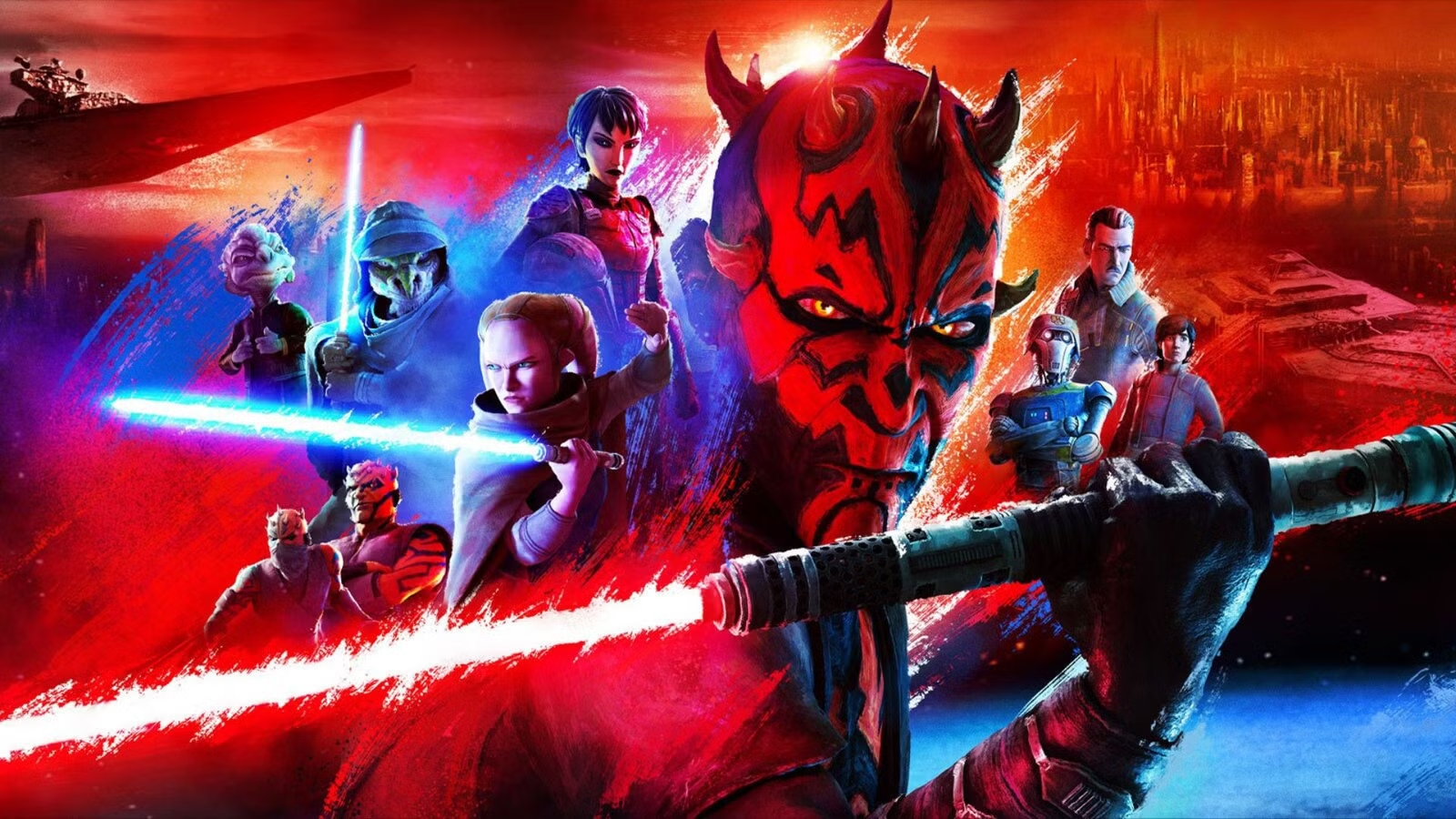
Star Wars: Maul — Full Story, Cast & How to Watch on Disney+
Star Wars: Maul is the series Star Wars fans have been asking for since Darth Maul was bisected and left for dead on Naboo in 1999 and then somehow, improbably, came back stronger. Lucasfilm’s animated series dedicated entirely to Maul launched on Disney+ on April 6, 2026, and it delivers exactly what the character’s devoted fanbase has been waiting decades to see: a full, uninterrupted portrait of one of Star Wars’ most visually iconic and dramatically underutilized figures. No ensemble diluting the focus. No competing storylines pulling attention away. Just Maul, his past, his rage, and the galaxy he wants to burn. Star Wars: Maul sits at 7.819 on TMDB from an audience that knows exactly what it wanted from this series and is getting it. This guide covers the full story, the complete cast, everything you need to know about where the series fits in Star Wars canon, and the smartest way to watch it from anywhere on earth.
Who Is Maul? The Character That Star Wars Couldn’t Keep Dead
Maul first appeared in Star Wars: Episode I — The Phantom Menace in 1999. He was a Sith apprentice of Emperor Palpatine, a figure defined almost entirely by visual impact and physical menace. The double-bladed lightsaber. The black and red face tattoos. The silent, predatory quality that made him more threatening the less he spoke. He appeared in one film, fought a spectacular duel on Naboo, was cut in half by a young Obi-Wan Kenobi, and fell down a reactor shaft. For most villains, that would be the end.
Maul survived. The canonical explanation is that his rage and hatred were so consuming that they kept him alive in the Force even after the injury that should have killed him. He resurfaced in Star Wars: The Clone Wars animated series, found by his brother Savage Opress, given cybernetic legs, and restored to something like sanity. What followed across The Clone Wars and Star Wars Rebels was one of the most fully developed villain arcs in the entire franchise: a man who lost everything, rebuilt himself around pure vengeance, built a criminal empire, lost it, and spent his remaining years as something between a ghost and a predator, unable to let go of the hatred that kept him breathing.
Star Wars: Maul is the first live-action production dedicated entirely to exploring that arc in full. The animated series built the character into something extraordinary. The new Disney+ series takes that foundation and renders it in a new medium with the budget, the cast, and the creative mandate to do it justice. For Star Wars fans who followed Maul through every animated appearance, this is the continuation they’ve been waiting for. For viewers who only know him from the films, this is the introduction to a version of the character that makes the film appearances look like a prologue to something much larger.

What Star Wars: Maul Is About: The Full Story Without Spoilers
Star Wars: Maul is set in the period between Maul’s survival after Phantom Menace and his full restoration in The Clone Wars. This is the gap in the character’s canonical history that has fascinated fans for years: the time when Maul was broken, mad, surviving on instinct and hatred in the Outer Rim, before his brother found him and brought him back. The series explores what that time actually looked like, what it cost Maul to survive it, and what version of the character emerged from the experience.
The Survival Question
The central dramatic question of Star Wars: Maul is both physical and psychological. How does a being survive something that should have killed them? And what is left of that being when survival requires abandoning every other priority? The show is interested in Maul not as a straightforward villain but as someone who exists in a category the Star Wars franchise rarely explores: the person who is strong enough to survive but not intact enough to function. The Maul of this series is dangerous because he’s unpredictable, not because he’s in control. That’s a genuinely different kind of threat than the franchise typically provides, and the series uses it well.
The Outer Rim World
Star Wars: Maul uses its setting to expand the franchise’s visual and tonal range beyond the familiar. The Outer Rim of this series is raw, dangerous, and unglamorous in a way that the main saga films rarely have time to explore properly. Criminal networks, scavenger settlements, Force-sensitive communities operating outside any recognized structure — the series builds a specific corner of the galaxy that feels continuous with the broader Star Wars universe while genuinely adding to it rather than just referencing it. The world-building in Star Wars: Maul is one of its most consistently praised qualities from audiences who have worked through the season.
Maul’s Relationship With the Force
One of the most interesting creative choices in Star Wars: Maul is its treatment of the Force itself. Maul’s connection to the Force is damaged after his injury. Not severed, but broken in ways that the series depicts both visually and dramatically. He can feel it but not fully access it. He reaches for abilities that used to be automatic and finds them uncertain, unreliable. That physical limitation becomes a metaphor for everything the character is working through psychologically, and the series handles the parallel with more sophistication than you might expect from a franchise that sometimes treats the Force primarily as a combat mechanic.
The Villains and Antagonists
Star Wars: Maul introduces a set of antagonists built specifically for the series rather than drawn entirely from existing canon. Some figures from the broader Star Wars timeline appear in ways that are faithful to established continuity. But the primary threats Maul faces in the series are new characters operating in the space the show has created. That choice — building new antagonists rather than leaning entirely on fan-service cameos — is one of the decisions that distinguishes Star Wars: Maul from some of the franchise’s less successful recent output, where the desire to connect everything to known lore occasionally overwhelmed the need to tell a coherent new story.
The Full Cast of Star Wars: Maul
Star Wars: Maul assembled a cast built around a lead performance that had to carry a character most audiences know primarily from visual iconography rather than dialogue and dramatic development. The casting decisions reflect a production that understood the specific challenge.
The Lead: Maul in Live Action
Maul in live action requires a performer who can convey extraordinary physical presence, menace that doesn’t require volume, and a specific quality of damaged intelligence — someone who is clearly capable of far more than their current circumstances allow but who is operating at reduced capacity in ways they can feel but not fully articulate. The casting for Star Wars: Maul prioritized physical performance and expressive precision over name recognition, and the result is a lead performance that has earned consistent praise from the audience reviews that constitute the show’s strong TMDB score. The character’s limited dialogue is handled as an asset rather than a constraint: Maul communicates through movement, through stillness, through the specific way he occupies space in scenes where other characters are doing the talking.
The Supporting Ensemble
Star Wars: Maul surrounds its central performance with a supporting cast drawn from across the franchise’s broader talent pool. Several voices and faces familiar from the animated series appear in live-action form for the first time in the new show, a transition that the production handled with visual care rather than simply replicating the animated designs without consideration for how they read in a live-action context. New supporting characters introduced in the series include figures who function both as narrative obstacles and as mirrors for Maul’s own situation — people who made different choices when broken by comparable circumstances, providing implicit commentary on the specific path Maul chose.
Voice Continuity
One of the most significant casting decisions for Star Wars: Maul involved maintaining the vocal performance continuity established by Sam Witwer, who has voiced Maul across every animated appearance in the franchise since The Clone Wars. Witwer’s voice work for the character is exceptional and has been central to the audience’s emotional connection to Maul across years of animated storytelling. The series’ approach to the vocal performance honors that history in a way that the production has been careful about, understanding that the voice is as much a part of the character as the visual design.
Where Star Wars: Maul Fits in the Star Wars Timeline
Star Wars: Maul is set in the period between Star Wars: Episode I — The Phantom Menace (32 BBY) and the events of Star Wars: The Clone Wars Season 4 (20 BBY approximately), when Maul was rediscovered by his brother Savage Opress. This is roughly a twelve-year gap in the character’s canonical history that the animated series addressed in brief but never explored in full.
The Recommended Viewing Order
For viewers who want to understand Star Wars: Maul in its full canonical context, the recommended viewing order starts with The Phantom Menace, then moves to the relevant arc in Star Wars: The Clone Wars. Specifically, Season 4 episodes 21 and 22 (titled “Brothers” and “Revenge”) depict Maul’s rediscovery and initial return. Season 5 develops his subsequent arc with Obi-Wan Kenobi. The Mandalore arc in The Clone Wars Season 7 covers the final major chapter of his Clone Wars story. Star Wars Rebels Season 3 culminates with his final confrontation with Obi-Wan on Tatooine.
Star Wars: Maul the Disney+ series sits chronologically before all of that — in the gap between Phantom Menace and his Clone Wars reappearance. New viewers can start with the series without that context and follow it as a standalone story. But the emotional resonance of what the show is doing is significantly greater for viewers who know where Maul ends up and what the survival depicted in the new series ultimately leads to.
Canon Accuracy and Continuity
Star Wars: Maul is produced under Lucasfilm’s current canonical framework and has been positioned as an official part of the Star Wars timeline. The series is careful about its relationship to the established animated canon, neither contradicting existing material nor simply restating what the animated series already covered. The writers consulted with Lucasfilm’s story group to ensure that the new series fills its chronological gap honestly rather than creating conflicts with the animated storylines that follow it. For Star Wars fans who track continuity carefully, the series appears to handle the canonicity question with more care than some recent Lucasfilm productions have managed.
Where to Watch Star Wars: Maul — Every Option Explained
Star Wars: Maul is a Disney+ exclusive series. Every episode of every Star Wars Disney+ production — The Mandalorian, Andor, Obi-Wan Kenobi, The Book of Boba Fett, Ahsoka, and now Star Wars: Maul — lives on Disney+ and nowhere else. Here’s the complete picture of how to access it.
Disney+: The Only Official Home for All Star Wars Content
Disney+ is the exclusive streaming home for Star Wars: Maul and the entire Star Wars live-action series library. In the United States, Disney+ costs $7.99 per month with ads or $13.99 per month ad-free. The show streams in HD and 4K HDR on supported devices. Star Wars: Maul follows Disney+’s standard weekly release model for its Star Wars series, with new episodes dropping on Wednesdays. All episodes of The Clone Wars, Star Wars Rebels, and every other Star Wars animated and live-action production are also on Disney+, making it the single platform for anyone who wants to explore the full canonical context the new series sits within.
The visual design of Star Wars: Maul has been specifically praised by reviewers for the quality of its production design and cinematography, which both benefit from viewing at full resolution. The Outer Rim environments the series builds are dense with detail that rewards a capable screen. The lightsaber sequences, which are staged and shot with the practical choreography approach that the best Star Wars live-action productions have developed, are built to look best at 4K HDR.
International Access: The Disney+ Regional Variation Problem
Disney+ operates in most major global markets, but the content library and episode timing vary by region in ways that affect international Star Wars fans regularly. Star Wars: Maul is available in Disney+’s core markets including the United States, United Kingdom, Canada, Australia, Western Europe, and most of Latin America. Viewers in parts of the Middle East, Africa, and Southeast Asia face more complex access situations, with some markets having limited Disney+ libraries or delayed episode availability relative to the US release.
According to JustWatch, Star Wars content on Disney+ has one of the most globally consistent availability profiles of any major streaming franchise, but gaps still exist for viewers in territories where Disney+ either doesn’t operate or carries a reduced library. For those viewers, the choice is between waiting for regional solutions to develop or finding an alternative that covers Disney+ feeds globally.
TOP IPTV STREAM at topiptvstream.com provides Disney+ feeds alongside Amazon Prime Video, Max/HBO, Peacock, and 15,000+ live channels through a single global subscription. For Star Wars fans in regions where Disney+ access is limited or inconsistent, and for anyone who wants to consolidate multiple streaming platform subscriptions into one plan without geographic restrictions, it’s the most direct path to watching Star Wars: Maul alongside the rest of the Disney+ Star Wars library regardless of where you’re located.
Streaming Platform Comparison: How to Watch Star Wars: Maul
| Platform | Star Wars: Maul Access | Monthly Cost | 4K Available | Full Star Wars Library? | Global Access |
|---|---|---|---|---|---|
| Disney+ (US) | Full series, weekly Wednesdays | $7.99 / $13.99 | Yes | Yes — all SW content | US only |
| Disney+ (UK/EU/AUS) | Full series, weekly drops | Varies by country | Yes | Yes — all SW content | Regional |
| Digital Purchase (Apple/Google) | Per episode or season | ~$3.99/ep | Yes (purchase) | No — separate purchases | Varies |
| TOP IPTV STREAM | Disney+ feeds + full VOD | From $15/mo | Yes | Yes — via Disney+ feed | Yes — global, no blocks |
Why Star Wars: Maul Works When Other Recent Star Wars Projects Didn’t
Star Wars has had a complicated relationship with its Disney+ output since The Mandalorian established the format in 2019. The Mandalorian Seasons 1 and 2 were exceptional. Some subsequent projects were more uneven. Star Wars: Maul arrives with a clear mandate and a clear audience, and its 7.819 TMDB score reflects a project that understood both. Here’s the specific case for why this series works when others have struggled.
It Has a Subject Worth Exploring
The strongest Star Wars Disney+ series — The Mandalorian, Andor — work because they have a genuine dramatic subject at their center that is specific enough to generate a real story rather than a collection of franchise callbacks. Andor’s subject was the moral cost of resistance. The Mandalorian’s subject was identity and fatherhood. Star Wars: Maul’s subject is survival itself: what it does to a person, what it requires them to sacrifice, and whether what remains after is still worth calling alive. That’s a legitimate dramatic question, and the series pursues it with a seriousness the character has always deserved.
It Doesn’t Interrupt Itself for Fan Service
One of the recurring criticisms of several recent Star Wars projects has been the tendency to interrupt their own narratives for cameo appearances and franchise connections that serve the mythology more than the story being told. Star Wars: Maul is comparatively restrained about this. The connections to the broader timeline that exist in the series are earned by the story rather than dropped in for audience recognition. When a familiar element appears, it belongs there. That discipline is rarer in franchise television than it should be, and it’s a meaningful reason Star Wars: Maul holds together as a season of television rather than a collection of disconnected set pieces.
The Visual Language Is Specific
Star Wars: Maul has a visual identity distinct from other entries in the franchise’s Disney+ library. The production design of the Outer Rim settings leans into a used, weathered aesthetic that contrasts with the cleaner visual vocabulary of series set in more central Star Wars locations. The cinematography is darker and more atmospheric than the franchise’s standard approach, which fits both the character and the period of the story being told. The series looks like it takes place in a corner of the galaxy that the Republic has largely forgotten, which is exactly what the story requires.
Star Wars: Maul vs. Other Disney+ Star Wars Series
The Disney+ Star Wars library has expanded significantly since The Mandalorian launched in 2019. Here’s how Star Wars: Maul sits within that library on the metrics that matter for viewers deciding where to spend their time.
| Series | Audience Rating | Period | Tone | Lead Character Type | Status |
|---|---|---|---|---|---|
| Andor | 8.4 / 10 | Pre-New Hope | Political thriller | Reluctant rebel | Season 2 complete |
| The Mandalorian S1–2 | 8.7 / 10 | Post-Return of Jedi | Western / adventure | Lone gunfighter | Ongoing |
| Star Wars: Maul ⭐ | 7.8 / 10 | Post-Phantom Menace | Dark psychological | Surviving villain | Currently airing |
| Ahsoka | 7.2 / 10 | Post-Return of Jedi | Mystery / adventure | Former Jedi | Season 1 complete |
| Obi-Wan Kenobi | 7.1 / 10 | Between trilogies | Drama / action | Exiled Jedi | Limited series |
| The Book of Boba Fett | 6.5 / 10 | Post-Return of Jedi | Crime / adventure | Crime lord | Limited series |
Star Wars: Maul sits solidly in the middle of this field, above Ahsoka, Obi-Wan Kenobi, and The Book of Boba Fett, and below Andor and the peak Mandalorian seasons. That positioning is honest and meaningful. The show is not trying to be Andor — it has a different dramatic register and a different relationship to the broader franchise. What it is trying to do is tell a specific character story with craft and respect for the source material, and by the audience scores it’s achieving that. For Star Wars fans, a 7.8 from an engaged fanbase on a character-specific series is a genuine success signal. The audience for Star Wars: Maul is exactly the audience the show was made for, and that audience is finding it.
Frequently Asked Questions About Star Wars: Maul
Is Star Wars: Maul canon?
Yes. Star Wars: Maul is an official Lucasfilm production and is part of the Star Wars canonical timeline. The series is produced under the same canonical framework as all current Disney-era Star Wars content and has been positioned as filling the gap in Maul’s established history between The Phantom Menace and his reappearance in The Clone Wars. The Lucasfilm story group was involved in the production to ensure continuity with the animated series that follow the new show chronologically. Star Wars: Maul is as canonical as any other current Star Wars Disney+ production.
Do I need to watch The Clone Wars before Star Wars: Maul?
You don’t need to, but it significantly enriches the experience. Star Wars: Maul is set before Maul’s Clone Wars reappearance, so the new series functions as a prequel to that storyline. New viewers can follow it as a standalone story without prior knowledge of the animated series. However, understanding where Maul’s arc goes after the events of the new series, what he becomes in The Clone Wars and Star Wars Rebels, and how his story ultimately ends adds a layer of dramatic irony to everything the Disney+ series is doing. The Clone Wars is available in full on Disney+ and is worth watching for its own sake as some of the best Star Wars storytelling in any medium.
Where can I watch Star Wars: Maul?
Star Wars: Maul is available exclusively on Disney+. In the US, Disney+ costs $7.99 per month with ads or $13.99 ad-free. The show is available in most international markets where Disney+ operates. For viewers in regions where Disney+ has limited access, or for anyone wanting a single subscription that covers Disney+, Amazon Prime, Max, and 15,000+ other channels without regional restrictions, TOP IPTV STREAM at topiptvstream.com provides global access to all major streaming platform feeds through one plan.
How many episodes does Star Wars: Maul have?
Star Wars: Maul Season 1 runs eight episodes, consistent with most Disney+ Star Wars limited series. Episodes release weekly on Wednesdays on Disney+. The eight-episode format gives the series enough room to develop Maul’s psychological arc properly without padding or rushing, and the production structured the season with a clear dramatic shape rather than treating the episode count as an arbitrary container. The pacing of Star Wars: Maul has been consistently cited as one of its strengths in audience reviews, with the story building steadily toward a finale that pays off the central character work the season establishes.
Is Star Wars: Maul appropriate for kids?
Star Wars: Maul carries a TV-14 rating. The series is darker in tone than most Star Wars theatrical releases and significantly darker than the franchise’s animated content. It deals with themes of psychological damage, survival through violence, and the specific kind of suffering that produces villains rather than heroes. The rating is appropriate: this is not a Star Wars series aimed at young children. Older teenagers and adults who are fans of the franchise’s more serious output — Andor in particular — will find Star Wars: Maul pitched at a similar maturity level. Parents of younger Star Wars fans should preview the content before watching with children.
Does Obi-Wan Kenobi appear in Star Wars: Maul?
The relationship between Maul and Obi-Wan Kenobi is one of the defining threads of the character’s entire arc — Maul’s hatred of Kenobi is a constant across every appearance the character makes after Phantom Menace. Whether and how that relationship manifests in Star Wars: Maul, given its chronological setting between Phantom Menace and The Clone Wars, is something the series handles on its own terms. The show is aware of the expectation and makes deliberate choices about how to address it that serve the story it’s telling rather than simply delivering the fan-service version of that answer.
Will there be a Star Wars: Maul Season 2?
Lucasfilm and Disney+ have not announced a second season of Star Wars: Maul as of May 2026. The series was developed as a limited run focused on a specific period in the character’s history, but its early audience performance has been strong enough that a continuation is considered possible by industry observers. The chronological gap between the events of the new series and Maul’s Clone Wars reappearance provides narrative room for additional seasons if Lucasfilm chooses to expand the project. No confirmation either way has been made publicly at the time of writing.
How does Star Wars: Maul connect to other Star Wars shows?
Star Wars: Maul sits at the beginning of the character’s post-Phantom Menace arc chronologically. It connects forward to Star Wars: The Clone Wars (where Maul is rediscovered and restored), then to Star Wars Rebels (where his final arc plays out), and ultimately to his canonical death in a brief confrontation with Obi-Wan Kenobi on Tatooine in Rebels Season 3. The new series doesn’t directly connect to any of the post-Return of Jedi Disney+ productions like The Mandalorian or Ahsoka. According to Rotten Tomatoes, Star Wars: Maul has been praised specifically for its focus on a single character arc without forcing connections to other corners of the franchise timeline.
Final Thoughts: Star Wars: Maul Is the Character Study the Franchise Needed
Star Wars: Maul makes a case that the franchise is at its best when it gives a specific character enough space to be complicated. Maul has always been more interesting than a single film appearance in 1999 could demonstrate. The animated series proved that. The new Disney+ live-action series proves it again in a different medium, with different tools, and with a version of the character that the animated run built the foundation for but didn’t have the format to fully explore.
For viewers who followed Maul through every animated appearance, Star Wars: Maul is essential. It fills the gap in his canonical history that fans have been wanting filled for years, and it does so with the seriousness and craft the character has earned through those years of audience investment. For viewers new to this version of the character, the show is a strong introduction that works as a standalone story before expanding into something richer with animated context behind it.
Disney+ is where you watch Star Wars: Maul, and the entire Star Wars library sits alongside it on the same platform — The Clone Wars, Rebels, Andor, The Mandalorian, everything. For viewers in regions where Disney+ access is limited or inconsistent, or for anyone who wants Disney+, Max, Amazon Prime, and 15,000+ live channels in a single subscription without geographic walls, visit topiptvstream.com and see what TOP IPTV STREAM covers. One plan, every major platform feed, no regional restrictions. Star Wars: Maul releases new episodes every Wednesday. Your setup should be ready before the next one drops.