The Chestnut Man: Netflix’s Best Nordic Crime Series Explained
The Chestnut Man is the Netflix Nordic crime series that refuses to let you put it down. Based on Søren Sveistrup’s debut novel — Sveistrup is the creator of the original Danish series The Killing, which redefined Nordic noir for international audiences — the show follows two Copenhagen detectives pursuing a serial killer who leaves a small figurine made from chestnuts at each crime scene. The killer’s connection to a missing child and a government minister creates a case that’s both a race-against-time thriller and a genuine mystery built on forensic specificity and character depth. The Chestnut Man sits at 7.468 on TMDB and has maintained consistent search traffic since its 2021 debut because the Nordic crime audience never stops looking for the next show that delivers this specific experience. Here’s why The Chestnut Man is worth finding, and how to watch it from anywhere.
What Is The Chestnut Man? Nordic Noir at Its Most Focused
The Chestnut Man is a Danish crime thriller series produced by Netflix and Nimbus Film, based on Søren Sveistrup’s 2018 novel of the same name. The series premiered globally on Netflix in September 2021 and established itself immediately as one of the strongest entries in the Nordic noir genre since the original Borgen and The Bridge set the international standard. It runs six episodes, each approximately 50 minutes, making it a complete binge in a single weekend or a satisfying week of evening viewing.
The show is set in Copenhagen in autumn — the specific grey, wet, leaf-strewn Copenhagen of October that the Nordic noir genre has made its native environment. Two detectives are paired: Naia Thulin, a brilliant investigator who has been trying to transfer out of homicide into a cybercrime unit where the hours will accommodate being a single parent, and Mark Hess, a Europol investigator recently returned from a damaging professional failure in The Hague who is assigned as her partner without her consent or enthusiasm. Their relationship is the show’s procedural engine: two people who don’t particularly want to work together discovering, through the specific pressure of an escalating case, that they’re exactly the right partners for this investigation.
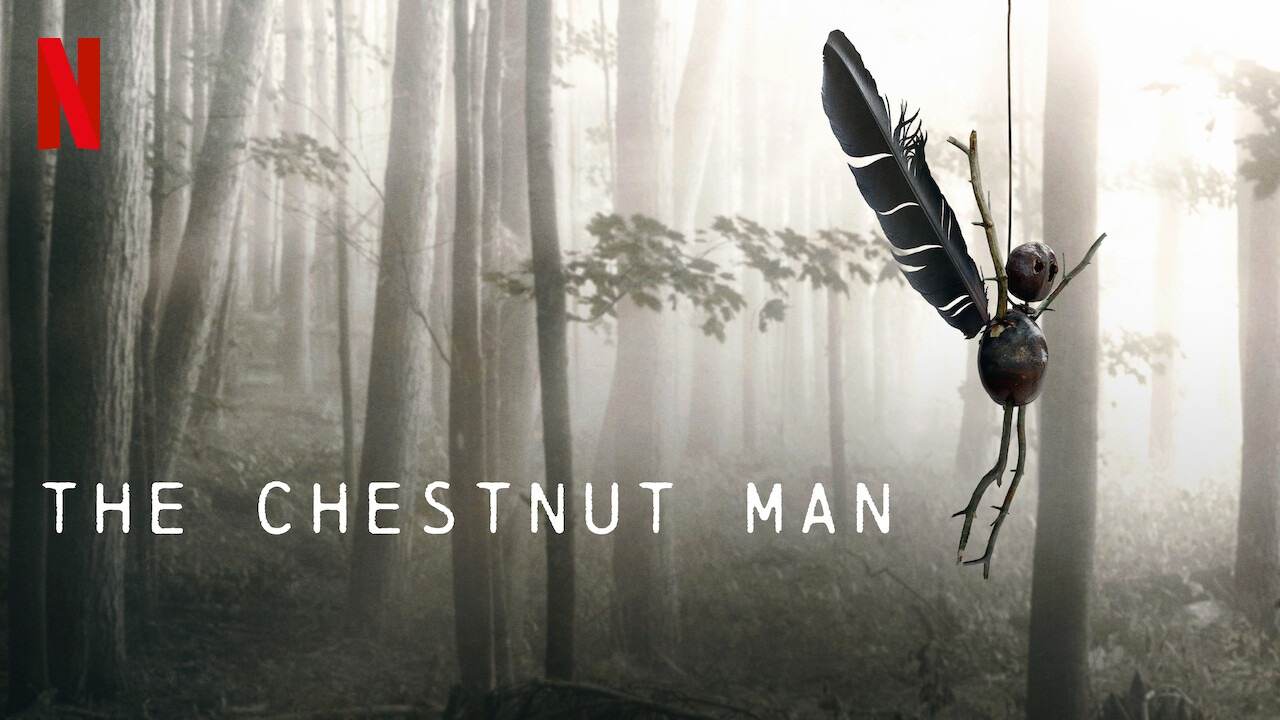
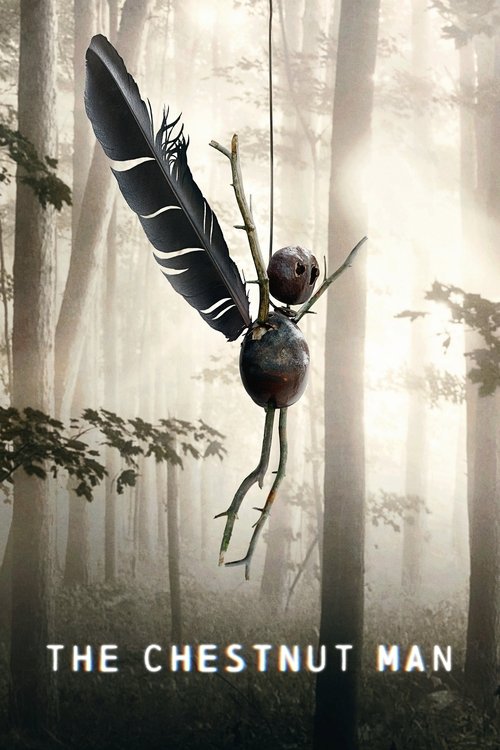
The case is built around a disturbing detail: at each murder scene, the killer leaves a figurine made from chestnuts and a matchstick — the kind children make in autumn. The figurines all have fingerprints. The fingerprints belong to a girl who has been missing for a year, the daughter of a government minister working on social welfare reform. The Chestnut Man’s investigation doesn’t just ask who the killer is. It asks what connects the victims to the missing girl — and what that connection means for the politician whose daughter disappeared and who has been living publicly with the certainty that her child is dead.
The Cast of The Chestnut Man
Danica Curcic as Naia Thulin
Danica Curcic’s Naia Thulin is one of the most fully realized detective protagonists in recent Nordic crime television. She’s good at her job in the specific way that creates problems — thorough enough to be indispensable in homicide, which means her transfer request keeps getting quietly deferred. She’s also a single parent raising a daughter with a forensic curiosity about the world that mirrors her own, and the tension between those two dimensions of her life — the job that won’t release her and the child she’s trying to be present for — runs through every episode without becoming melodrama. Curcic plays the character with a dry intelligence that makes Thulin’s interactions with almost everyone in the show subtly funny even when the case is most dire.
Mikkel Boe Følsgaard as Mark Hess
Mark Hess is a more conventionally damaged detective — someone who has made a serious professional error and is working out its consequences — but Mikkel Boe Følsgaard plays the role with enough specificity that the archetype feels inhabited rather than performed. His failure at Europol is connected to the case he’s now working in ways that take most of the series to fully reveal, and Følsgaard manages the slow revelation of what that failure actually was with a quality of controlled withholding that makes every piece of the backstory land when it arrives.
Iben Dorner as Rosa Hartung
The politician whose daughter went missing a year ago is one of the show’s most interesting characters because she exists in a different narrative register from the procedural thriller that surrounds her. Rosa Hartung is a woman who has processed the public version of her grief — the press conferences, the formal acknowledgment that her daughter is presumed dead, the return to professional life — while the private version remains entirely unresolved. The discovery that the killer leaving figurines at crime scenes has access to her daughter’s fingerprints reopens everything she thought she had finished surviving. Iben Dorner’s performance makes Rosa a complete person rather than a narrative function.
The Story of The Chestnut Man: What Makes It Work
The Procedural Craft
The Chestnut Man is procedurally precise in the way that Søren Sveistrup’s best work always is. The investigation follows logical steps, the evidence is presented clearly enough that attentive viewers can track the reasoning, and the dead ends and misdirections are built from plausible investigation choices rather than from the narrative need to delay the solution. This is the specific quality that separates good crime fiction from crime fiction that uses the mystery structure as a vehicle for atmosphere without caring whether the mystery itself is fair. The Chestnut Man cares. The solution is built on clues that were visible throughout, and the retrospective satisfaction of recognizing them is one of the show’s most consistent pleasures.
The Atmosphere
Autumn Copenhagen as rendered in The Chestnut Man is one of the most effective uses of setting in recent crime television. The show’s cinematography uses the season — the fallen leaves, the specific grey-gold light, the perpetual damp — as active emotional context rather than decorative backdrop. The chestnut figurines, which are the kind of thing children make from fallen autumn nuts, gain additional resonance from existing in the same visual environment as the leaves they came from. The killer is using the materials of the season to mark their crimes, and the season is everywhere.
The Missing Girl Thread
The Chestnut Man’s most emotionally powerful element is the missing girl storyline that runs parallel to the murder investigation. The connection between the killer’s crimes and Hartung’s missing daughter is the mystery that keeps expanding the further the detectives get into it, and the show handles the revelation of what that connection is with genuine respect for the emotional weight it carries. The series doesn’t use the missing child as pure genre fuel. It treats the possibility that she might still be alive as something that costs the people looking for answers something real to hope for.
Where to Watch The Chestnut Man on Netflix
The Chestnut Man is a Netflix original series available on Netflix globally. Here’s everything you need to know.
Netflix: The Only Official Platform
The Chestnut Man is available on Netflix in all markets where the platform operates. All six episodes are available simultaneously — this is not a weekly release series but a full-season drop that the Nordic crime audience, which tends toward binge consumption, will appreciate. The show is available in Danish with subtitles or dubbed versions in multiple languages. The subtitle version is strongly recommended: the specific quality of the performances is carried in the original Danish voices, and the show’s atmosphere is consistent with watching in the original language.
According to Rotten Tomatoes, The Chestnut Man holds strong audience scores from the Netflix subscriber base, with particular acclaim for its procedural precision and Danica Curcic’s central performance. The show has maintained this standing since its 2021 debut, which is the mark of a crime series that earns new viewers through word-of-mouth rather than requiring marketing reinvestment to sustain its audience.
For viewers who want The Chestnut Man alongside Amazon Prime, Max/HBO, Disney+, and 15,000+ live channels in a single global subscription, TOP IPTV STREAM at topiptvstream.com provides all major streaming platform feeds through one plan without regional restrictions.
| Platform | The Chestnut Man Access | Monthly Cost | Original Language? | Global Access |
|---|---|---|---|---|
| Netflix (Standard) | Full series — Netflix exclusive | $15.49 (US) / £10.99 (UK) | Yes — Danish with subtitles | 190+ countries |
| Netflix (Ads Plan) | Full series — with ads | $7.99/mo (US) | Yes | 190+ countries |
| Digital Purchase/Rental | Not available — Netflix exclusive | N/A | N/A | N/A |
| TOP IPTV STREAM | Netflix feeds + 15,000+ channels | From $15/mo | Yes | Yes — global, no blocks |
The Chestnut Man vs. Other Nordic Noir Series
| Series | Platform | Audience Rating | Country | Episodes | Status |
|---|---|---|---|---|---|
| The Chestnut Man ⭐ | Netflix | 7.5 / 10 | Denmark | 6 — complete binge | Available now |
| The Killing (Forbrydelsen) | Various | 8.5 / 10 | Denmark | 40 across 3 seasons | Classic — complete |
| The Bridge (Broen) | Various | 8.6 / 10 | Denmark/Sweden | 38 across 4 seasons | Classic — complete |
| Bordertown | Netflix | 7.7 / 10 | Finland | 30 across 3 seasons | Complete |
| Young Wallander | Netflix | 6.5 / 10 | Sweden | 12 across 2 seasons | Complete |
Frequently Asked Questions About The Chestnut Man
Is The Chestnut Man based on a book?
Yes. The Chestnut Man is adapted from Søren Sveistrup’s 2018 debut novel of the same name. Sveistrup is best known as the creator and writer of the original Danish series Forbrydelsen (The Killing), which is widely credited with establishing Nordic noir as a global television genre. His novel was a bestseller across Scandinavia and in translation, and the Netflix adaptation stays close to the source material’s structure and tone while making the compression adjustments that translating a novel to six television episodes requires.
Where can I watch The Chestnut Man?
The Chestnut Man is available exclusively on Netflix globally. All six episodes are available simultaneously. A Netflix subscription is required — the series is not available for rental or purchase on other platforms. For viewers who want Netflix alongside other major streaming platforms in a single subscription, TOP IPTV STREAM at topiptvstream.com provides all major streaming platform feeds through one global plan with no regional restrictions.
How many episodes does The Chestnut Man have?
The Chestnut Man has six episodes, each approximately 50 minutes in length. All six are available simultaneously on Netflix. The six-episode format is ideal for the story — enough room to develop the procedural investigation and the character backstories with proper depth, while maintaining the narrative momentum of a mystery that keeps expanding toward a climax the structure earns. The complete series can be watched in one focused weekend sitting or spread comfortably across a working week.
Is The Chestnut Man in Danish?
Yes. The Chestnut Man is a Danish production and the original language is Danish. Netflix offers the series with subtitles in multiple languages and dubbed versions in several major languages. The subtitle version is the recommended viewing experience for audiences who can manage subtitles — the original performances carry nuances that dubbed versions can’t fully replicate. For viewers who prefer dubbing, the available dubbed versions are high quality by the standards of foreign language dubbing on major streaming platforms.
Is The Chestnut Man appropriate for sensitive viewers?
The Chestnut Man carries a TV-MA rating. The series deals with serial murder, a missing child, and crimes depicted with the specificity that Nordic crime television brings to the genre. The violence is not gratuitous in the manner of exploitation horror, but it is depicted with a documentary directness that makes it genuinely disturbing rather than safely aesthetic. Viewers who are sensitive to content involving children in danger should approach the series with that awareness. The show handles these elements with craft rather than carelessness, but it doesn’t look away from them either.
Final Thoughts: The Chestnut Man Is the Nordic Crime Series That Earns Every Recommendation
The Chestnut Man has sustained its reputation on Netflix for nearly five years through one mechanism: viewers who watch it tell other viewers to watch it. That’s the only kind of cultural longevity that isn’t manufactured, and it comes from delivering on the genre’s specific promises with craft and seriousness. The procedural investigation is sound. The characters are real people rather than detective archetypes. The atmosphere is exceptional. And the mystery at the center of the series — the missing girl, the chestnut figurines, the killer who has been watching a specific family for a specific reason — is built with the kind of structural care that makes the solution feel earned rather than arbitrary.
It’s six episodes. It’s on Netflix right now. If you’ve been looking for Nordic crime that matches The Bridge or The Killing in quality and you haven’t watched The Chestnut Man yet, this is where you start. For access to Netflix alongside every other major streaming platform in a single global subscription, visit topiptvstream.com and see what TOP IPTV STREAM covers. One plan, 15,000+ channels, every streaming feed, no geographic restrictions. The figurines are waiting.