Guardiola Threatened to Quit Man City “100 Times” — Chairman’s Explosive Revelations Rewrite the Story of a Dynasty
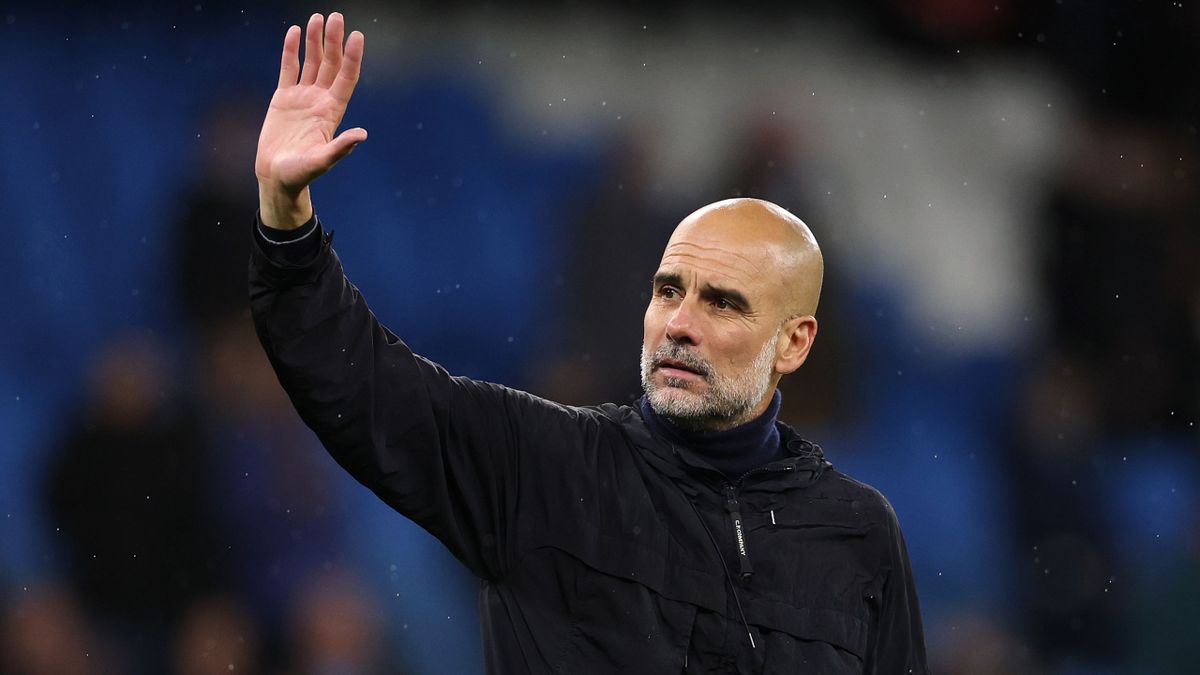
Pep Guardiola was like “The Boy Who Cried Wolf.” That is not a line from a tabloid. It is the precise metaphor used by Manchester City chairman Khaldoon Al Mubarak in his annual end-of-season interview — the most candid, revealing, and emotionally significant account of what it actually meant to manage the greatest dynasty in English football history. For ten years, across low moments that nobody outside the Etihad inner circle ever knew about, Guardiola threatened to quit. Over and over. In the downs, the frustrations, the moments when the pressure became suffocating, he told his chairman he was done. And every time, Khaldoon talked him back. “I consider myself his psychiatrist,” the chairman said. Until this season. This time, both men knew it was real.
Khaldoon’s Full Confession: “He Must Have Quit 100 Times”
The Manchester City chairman’s annual interview, published on Thursday June 4 via the club’s own media channels, is the most revealing account of the Guardiola era that has ever been made public. Khaldoon Al Mubarak spoke for the first time about the psychological reality of managing the most demanding, most emotionally intense, most brilliant football mind in the sport’s modern era — and what he said reframes everything we thought we understood about how those ten years actually felt from the inside.
“Inevitably over these last 10 years we’ve had a lot of ups and some downs,” Al Mubarak told Sky Sports in their coverage of the interview. “And in the downs, he must have quit 100 times over these 10 years, just so you know, just for the record. There’s the story as you all know, The Boy that Cries Wolf. In the case of Pep, when he says ‘I quit’, it doesn’t mean he’s quitting. You don’t take it that seriously — you have to manage him.”
The phrase “you have to manage him” is extraordinary coming from a club chairman about one of the most respected managers in football history. But it captures something true about Guardiola that anyone who has followed his career closely has sensed: beneath the composed tactical masterclass, beneath the press conference composure and the detailed preparation and the focus, there is a deeply emotional person who processes difficulty through extremes. In the bad moments, he doesn’t compartmentalise. He explodes. And apparently, from 2016 to 2026, those explosions often came with resignation letters — or at least the verbal equivalent.
The Chairman as Psychiatrist: What the Relationship Really Looked Like
The most striking image in Khaldoon’s entire interview is the one he paints of himself — not as the powerful chairman of a billion-pound football club, but as the person who had to talk the world’s best manager down from the ledge, repeatedly, across a decade, in private conversations that nobody else witnessed.
“Over these years we have become close friends,” Al Mubarak said. “And I will say, and I don’t know if he will admit it, but I consider myself his psychiatrist. I had to help him over the years. Not in the good times — the good times is easy — it’s always the challenging part. Whenever he quits or whenever he thinks it’s time, I will always convince him to come back, until the time where I know it’s actually the real time — and we reached that.”
That final sentence is the key. “Until the time where I know it’s actually the real time.” For a decade, every time Guardiola said he was leaving, Al Mubarak fought it, convinced him, brought him back. He had developed, over years of close friendship, the ability to distinguish between the emotional threat and the genuine decision. And this season — after the FA Cup win over Chelsea, after the League Cup earlier in the campaign — he knew immediately that this time was different. He didn’t fight it. He didn’t try to talk him back.
The Secret: Guardiola Never Planned to Stay This Long
One of the most surprising revelations in the interview is the timeline Guardiola originally had in mind. When Pep Guardiola arrived at Manchester City in 2016, he did not arrive planning to stay a decade. He was thinking four or five years at most — a typical span for a Guardiola tenure, consistent with his periods at Barcelona and Bayern Munich.
“He never envisaged being at City for more than four or five years,” Al Mubarak confirmed. The fact that he stayed ten — that the relationship extended so far beyond what either man originally imagined — is a testament to what they built together, to the depth of the friendship, and to what each man drew from the other professionally and personally. Guardiola always talked about leaving, but the reality of what City had built kept him coming back. Until it couldn’t anymore.
The Moment He Knew: “I Did Not Fight This at All”
The most moving passage of the interview is the chairman’s description of the moment he knew this time was different. There is no drama in his words. There is resignation in the best sense — an acceptance of something inevitable that both men arrived at together.
“In this particular moment, I think he knew, and I knew that he knew,” Al Mubarak said. “I did not fight this at all because I knew this was the time he actually meant it.” Ten years of fighting for Guardiola to stay, ten years of playing psychiatrist and friend and sometimes negotiator between the emotional reality of managing at the highest level and the rational reality of what the club needed — and when the real moment finally came, the chairman simply stepped aside and let it happen. He had earned the right to know the difference. He had earned the right to let it go.
City “Far From Peaked”: The Transfer Window and Maresca
Beyond the personal revelations, the interview also contained clear signals about Manchester City’s immediate future. The club finished seven points behind Arsenal in the Premier League this season — their third consecutive campaign without winning the title — and the narrative that Guardiola’s departure signals the end of City’s dominant era is one Khaldoon addressed directly.
“We are far from peaked,” he said. “We are used to — because it’s in our DNA — winning. This is a club that is designed, built to win. Obviously with the additions we’re going to make this summer, I am very confident. I think next year we’re going to come back very strong.”
The “additions” are where Enzo Maresca comes in. The former Guardiola assistant at City, who won the UEFA Conference League and FIFA Club World Cup during his 18-month tenure at Chelsea before his departure in January 2026, is expected to be named as the new manager imminently. Maresca is a figure who knows City’s culture intimately — he managed their Elite Development Squad to Premier League 2 glory in 2020-21 before progressing through Leicester and then Chelsea. He is Guardiola’s philosophy installed in a younger, less emotionally volatile body. The succession is not a break. It is a continuation.
| Key Revelation | Quote |
|---|---|
| 100 quit threats | “He must have quit 100 times over these 10 years, just so you know” |
| The analogy | “There’s the story as you all know, The Boy that Cries Wolf” |
| The friendship | “I consider myself his psychiatrist” |
| Original plan | “He never envisaged being at City for more than four or five years” |
| The final moment | “I did not fight this at all because I knew this was the time he actually meant it” |
| City’s future | “We are far from peaked” |
| Next manager | Enzo Maresca expected “very soon” |
What This Changes About How We Remember the Era
The 100 quit threats change the mythology of the Guardiola decade at City in an important way. The popular image — the supremely controlled tactical genius, serene and decisive, always operating from a position of strength — was never the full truth. What was actually happening, behind closed doors, was a much more human story. A perfectionist who found the gap between where his team was and where he believed it should be unbearable. A manager who reacted to setbacks with a visceral emotional intensity that regularly crossed into thoughts of resignation. A chairman who had to learn to read the difference between a real threat and a passing storm.
That full picture — the pressure, the emotional intensity, the 100 threats and the 100 times Khaldoon talked him back — makes what City achieved across ten years more impressive, not less. Guardiola did not win six Premier League titles from a place of calm. He won them from a place of fire that sometimes burned him and sometimes burned everyone around him, and a friend who knew when to hold the flame and when to let it go.
Watch Manchester City Under Maresca Next Season
Manchester City under Enzo Maresca next season will be one of the most closely watched new managerial eras in Premier League history. Their fixtures broadcast live on Sky Sports Premier League in the UK and USA Network and Peacock in the United States. For fans who want to watch every City match next season — Premier League, Champions League, and domestic cups — from anywhere in the world, TOP IPTV STREAM carries Sky Sports PL, USA Network, and every City broadcaster globally in HD and 4K. Start a free 24-hour trial today.
FAQ: Guardiola and Manchester City
Why did Pep Guardiola leave Manchester City?
Pep Guardiola left Manchester City at the end of the 2025-26 season after admitting he no longer had the energy to drive the club forward. The 55-year-old had one year remaining on his contract but chose not to extend it. According to City chairman Khaldoon Al Mubarak’s annual interview published on June 4, 2026, Guardiola had threatened to quit “100 times” during his decade at the club — but Al Mubarak always talked him back until this season, when the chairman recognised for the first time that the decision was final. Guardiola finished his City career with 20 major trophies including six Premier League titles and the Champions League.
Who is replacing Guardiola at Manchester City?
Enzo Maresca is expected to be announced as Manchester City’s new manager imminently. The Italian worked under Guardiola as a coaching assistant at City in the 2022-23 season, then managed Leicester to the Championship title and Premier League promotion before joining Chelsea, where he won the UEFA Conference League and FIFA Club World Cup before departing in January 2026. Khaldoon Al Mubarak confirmed the club has gone through a “very thoughtful and structured process” and will announce their choice “very soon.”
How many trophies did Guardiola win at Manchester City?
Pep Guardiola won 20 major trophies during his ten-year tenure at Manchester City from 2016 to 2026. These included six Premier League titles, one UEFA Champions League (as part of the 2022-23 historic domestic treble), four FA Cups, seven League Cups, and two Community Shields. The 2025-26 season added the FA Cup and Carabao Cup, making it a domestic cup double in Guardiola’s farewell campaign despite finishing second in the Premier League behind Arsenal.
Final Thoughts: The Boy Who Cried Wolf — And Then Meant It
The story of Pep Guardiola at Manchester City will be told for decades. The trophies. The tactics. The standards. The players whose careers were transformed. The football that changed what English supporters expected from the game. All of it is part of the permanent record.
And now, thanks to Khaldoon Al Mubarak’s annual interview, there is one more layer to the story. The 100 quit threats. The psychiatrist-chairman who talked him back from the edge time and time again. The friendship that made it possible to sustain the impossible intensity of the most successful managerial relationship in the Premier League’s history. And the final moment — quiet, confirmed, accepted — when both men simply knew that the real time had come.
The Boy Who Cried Wolf finally told the truth. And Manchester City, shaped by the man who shaped them, prepare to go again without him. “Far from peaked.” That sounds exactly like something Guardiola himself would say. It may be the most important thing Khaldoon said in the whole interview. Watch City’s first season without Guardiola live on TOP IPTV STREAM — all Premier League broadcasters globally in HD and 4K, from $15/mo.