Messi Breaks World Cup Scoring Record With Goals 17 and 18 vs Austria — He Missed a Penalty, Then Cried
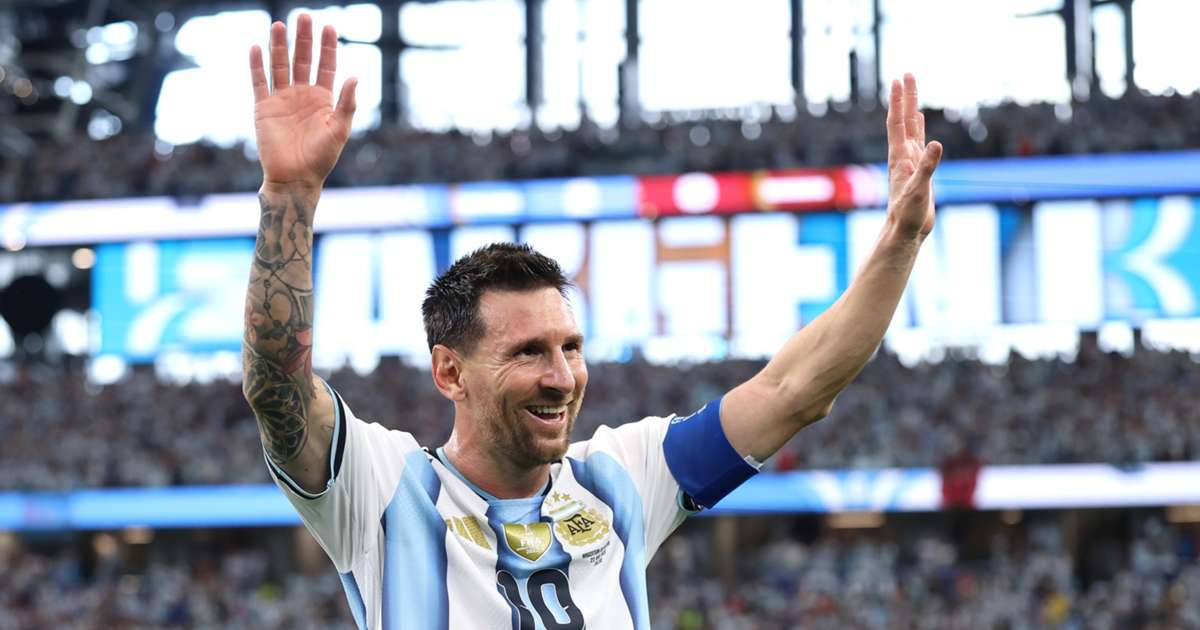
He missed the penalty. He cried. And then he scored twice anyway. Lionel Messi became the greatest World Cup goalscorer in the history of the sport on Monday June 22 in Dallas Stadium — not with the penalty kick that the arena held its breath for in the ninth minute, and which he dragged wide, but with a composed left-footed finish in the 38th minute off a pull-back from Facundo Medina that made him the first player in history to score 17 goals at a men’s World Cup. He then added an 18th in stoppage time. Argentina won 2-0 against Austria, qualified for the round of 32, and confirmed Messi as not just the greatest scorer in men’s World Cup history but — with his 17th goal surpassing Marta’s tally — the greatest scorer across the history of the entire World Cup. Men’s and women’s combined. No one has ever scored more at football’s biggest competition. The record belongs to Lionel Messi, who turned 39 on Wednesday.
The Record-Breaking Goal: What Happened in the 38th Minute
The context of the record-breaking moment makes it more significant than the bare statistic. Messi had missed a penalty in the ninth minute — the ball going wide right of Patrick Pentz’s goal, the stadium falling silent, faint Austrian cheers cutting through the shock. A crowd that had stood on its feet to witness history was suddenly sitting back down. Argentina’s players looked at each other. Messi, according to ESPN’s sideline reporting, was visibly distressed — and not only about the missed kick. His father Jorge had been undergoing medical treatment for an undisclosed illness in the week preceding the match, with the Messi family asking for “humanity” from the media. The weight of those circumstances was written across his face in the first 30 minutes.
Then came the 38th minute. Facundo Medina drove from the right side and pulled the ball back low across the box. Messi arrived on the move, took one touch to set himself, and buried a left-footed finish into the far corner. According to ESPN’s match analysis, “fans sang ‘Messi, Messi’ while bowing in unison to celebrate as the Albiceleste captain made history.” The Argentina players mobbed him. Messi, still running from the celebration, pulled down the collar of his Albiceleste shirt and pressed it to his eyes. The tears came. Not about football. About a harder week than any goal can fix. “My tears after the first goal? I’ve had some tough days. It wasn’t related to soccer. And those feelings were because of that,” Messi said after the game. “I thank my teammates, the coaching staff and the delegation for helping me.”
Messi’s 18 World Cup Goals: Every Record He Now Holds
| Record | Detail | Previous Holder |
|---|---|---|
| All-time men’s World Cup goals | 18 goals across 6 tournaments | Miroslav Klose (Germany) — 16 |
| All-time World Cup goals — men’s AND women’s combined | 18 goals — the outright record across all editions | Marta (Brazil women) — 17 |
| Scored in 6 consecutive World Cup games | 3rd player ever to achieve this | Just Fontaine (1958), Jairzinho (1970) |
| Most goals in 2026 World Cup so far | 5 goals in 2 matches | Joint-most in the tournament |
| Most World Cup appearances — outfield player | Record-equalling 6th World Cup | Tied with Cristiano Ronaldo |
| Argentina all-time leading scorer | 122 international goals | N/A — Messi held it already |
| Most World Cup victories all-time | 17 wins — surpassing Klose’s 17 | Miroslav Klose (Germany) |
The Hand of God Anniversary: Football’s Most Poetic Timing
The date of Messi’s record-breaking goal against Austria is June 22. The date of Diego Maradona’s “Hand of God” goal against England at the 1986 World Cup — the most discussed, most controversial, most mythologised goal in the history of football — was June 22, 1986. Exactly 40 years separates the two. Argentina scored a world-record goal on the same date, 40 years apart. The first belongs to Argentina’s previous greatest footballer. The second belongs to his successor — and, by any analytical measure, the man who has surpassed him as the greatest to ever play the game.
Messi did not reference the Maradona connection directly after the game, as he rarely does. He has always been careful to respect Maradona’s legacy while quietly building his own story that objectively exceeds it in breadth and longevity. But the Argentine media and the global football conversation have not been similarly restrained. The symmetry is the kind that only sport produces once or twice in a generation.
Twenty Years From First to Greatest: The Complete Story
Messi’s first World Cup goal came on June 16, 2006 — as an 18-year-old substitute against Serbia and Montenegro in Gelsenkirchen, Germany, with Argentina already leading comfortably. He came on in the second half, scored within minutes, and left the pitch as a young man whose future was entirely ahead of him. Twenty years later, almost to the day, he opened the 2026 World Cup with a hat-trick against Algeria — tying Klose’s record in a single performance. Six days after that, he broke it against Austria.
The journey was not linear. Messi scored zero goals in the 2010 World Cup — the only tournament of his six where he has failed to find the net. He scored four times at the 2014 World Cup in Brazil, in a final that Argentina lost to Germany. He scored once in 2018. Then came Qatar 2022: seven goals including two in the final, the World Cup title, the redemption, the completion of a career. And now this. Five goals in two 2026 World Cup games. Eighteen total. The record belongs to him.
Argentina Through to the Knockouts — The Road Ahead
The 2-0 win over Austria confirmed Argentina’s place in the round of 32. They lead Group J with six points from two matches. Their final group game is against Jordan on June 28 — likely to deliver further Messi goals and potentially extend the record further before the knockout rounds begin. Scaloni’s squad, built around Messi’s brilliance and the increasingly impressive Enzo Fernandez in midfield, look capable of deep tournament runs. Their defensive shape against Austria, holding firm despite genuine Austrian pressure in the opening 30 minutes, was more convincing than their Algeria performance. CBS Sports noted that Argentina “extended its winning streak in the tournament to eight since a shocking loss to Saudi Arabia in Qatar 2022.”
The Golden Boot Race: Mbappé at 16, Haaland and Kane Closing
The World Cup scoring race took dramatic shape on the same day as Messi’s record. While Argentina defeated Austria, France beat Iraq 3-0 in a separate fixture — Kylian Mbappé scoring twice to take his career World Cup total to 16, equalling Miroslav Klose’s former record. The Frenchman is now two goals behind Messi and closing fast. At 27, with potentially two more World Cups ahead of him, the long-term question of whether Mbappé will eventually overtake Messi’s record is the statistical storyline of this tournament that extends deepest into the future.
| Player | Age | 2026 Goals | Career WC Goals | Gap to Messi |
|---|---|---|---|---|
| Lionel Messi 👑 RECORD | 39 | 5 | 18 | — |
| Kylian Mbappé | 27 | 4 | 16 | -2 |
| Harry Kane | 32 | 2 | 6 | -12 |
| Erling Haaland | 25 | 2 | 2 | -16 |
| Miroslav Klose (retired) | — | — | 16 | Former record |
How to Watch Every Remaining Messi World Cup Match
Argentina’s final group game is against Jordan on Sunday June 28 at 5pm ET (10pm BST). Their knockout round matches will be confirmed following the completion of group stage fixtures. In the United States, Argentina’s matches air on FOX or FS1. In the United Kingdom, they broadcast on BBC One or ITV1 — both completely free to air. For fans outside their home market who want every remaining Argentina match live in HD and 4K without geo-restrictions, TOP IPTV STREAM carries FOX Sports, FS1, BBC One, ITV1, and every World Cup 2026 broadcaster globally. Start a free 24-hour trial today and don’t miss Messi’s next record attempt.
FAQ: Messi Breaks World Cup Scoring Record 2026
How many World Cup goals does Messi have after Austria?
Lionel Messi has 18 World Cup goals after his double against Austria on June 22, 2026 — the most in the history of both the men’s World Cup and the combined men’s and women’s World Cup. He broke Miroslav Klose’s men’s record of 16 with his 17th goal in the 38th minute, then surpassed Marta’s combined record of 17 with his 18th goal in stoppage time. Messi now leads the all-time World Cup scoring charts by two goals from Klose and Mbappé (both 16).
When did Messi break Klose’s World Cup record?
Lionel Messi broke Miroslav Klose’s World Cup scoring record on June 22, 2026, at Dallas Stadium in Arlington, Texas, during Argentina’s 2-0 Group J win over Austria. The record-breaking 17th goal came in the 38th minute — a left-footed finish from a Facundo Medina pull-back. He had missed a penalty in the 9th minute before finding the net. His 18th World Cup goal came in stoppage time in the same match, surpassing Marta’s combined World Cup record of 17 goals.
Why did Messi cry after his record goal against Austria?
Messi was visibly emotional after scoring his record-breaking 17th World Cup goal, pulling his shirt to his eyes in tears. He explained afterwards that his emotion was not about the football milestone but about personal circumstances: his father Jorge had been undergoing medical treatment for an undisclosed illness during the week preceding the match. “My tears after the first goal? I’ve had some tough days. It wasn’t related to soccer. And those feelings were because of that,” Messi told reporters. “I thank my teammates, the coaching staff and the delegation for helping me.”
What was the significance of the date June 22 for Argentina?
June 22 carries enormous significance in Argentine football history. On June 22, 1986, Diego Maradona scored the “Hand of God” goal against England at the Mexico City World Cup — one of the most iconic and controversial moments in the tournament’s history. Exactly 40 years later, on June 22, 2026, Messi scored his record-breaking 17th World Cup goal against Austria in Dallas to become the greatest scorer in men’s World Cup history. The 40-year anniversary connection between the two Argentine icons on the same calendar date was widely noted by football media across the world.
Final Thoughts: The GOAT Debate Is Over
The GOAT debate in football has been an animating feature of the sport’s media and fan culture for over a decade. Eight Ballon d’Or awards. A World Cup title in Qatar. Six World Cups. Now the all-time World Cup scoring record across both the men’s and women’s game. Whatever measure you apply — trophies, individual statistics, longevity, consistency at the highest level — Messi is the answer at the top of every list. The debate, if anyone still wants to have it seriously, must now be conducted in the context of 18 World Cup goals that no player in history has ever matched.
None of it explains the tears. The tears were about a father in a hospital and a son who scored 18 World Cup goals and could only think of getting home. That is who Lionel Messi is. Not just the greatest goalscorer in history. The most complete person on the pitch, carrying the most weight, delivering the most extraordinary performances anyway. Dallas saw it on June 22. The record belongs to him. It may always.
Watch every remaining Messi and Argentina World Cup 2026 match live on TOP IPTV STREAM — FOX Sports, FS1, BBC One, ITV1, and every broadcaster globally in HD and 4K, from $15/mo. Start a free 24-hour trial today.