The Backrooms Mythology Explained: Every Level, Every Entity, and How the Film Uses the Lore
The Backrooms film opened four days ago and scored 9.2 on TMDB from its opening audiences. A lot of people who saw it are now searching for the mythology behind it — the seven years of community-built lore, the hundreds of levels, the entities, the specific logic of how noclipping works and what the Backrooms actually is according to the mythology that built one of the most significant internet horror communities ever created. This guide is for those people. It covers everything: the complete Backrooms mythology, every major level from Level 0 through the most dangerous classifications, the entities and how the community categorized them, Kane Pixels and how his YouTube series transformed the concept, and how the 2026 film translates all of it to a theatrical experience. Consider this your complete guide to the Backrooms universe — the film is the destination, and the mythology is the map.
What Is the Backrooms Mythology? The Complete Origin Story
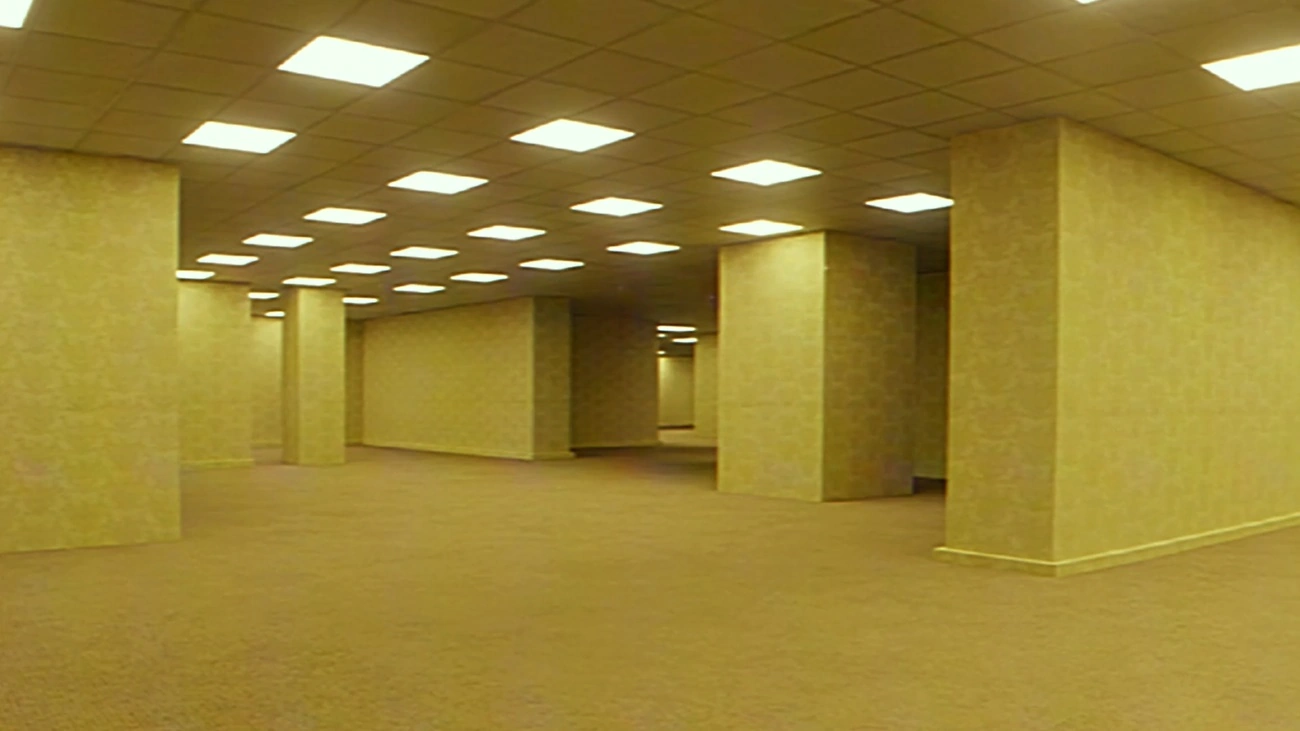
The Backrooms mythology began with a single post on 4chan’s paranormal board in May 2019. An anonymous user posted a photograph of an empty room — yellow-green carpet, fluorescent lights, no windows, no doors visible in the frame — and wrote a brief description: if you’re not careful and you noclip out of reality in the wrong areas, you’ll end up in the Backrooms, where it’s nothing but the stink of old moist carpet, the madness of mono-yellow, the endless background noise of fluorescent lights at maximum hum-buzz, and approximately six hundred million square miles of randomly segmented empty rooms to be trapped in. God save you if you hear something wandering around nearby, because it sure as hell has heard you.
That’s the original text. The photograph was a genuine image of an empty retail or office space, probably photographed by someone with a wide-angle lens that distorted the proportions into something slightly wrong. But the combination of image and text created something that resonated immediately and specifically with internet horror culture: it described a fear that is genuinely universal — the specific dread of being somewhere familiar but wrong, alone, without exits — and gave it a fictional framework precise enough to feel real.
What happened next was one of the most remarkable acts of collaborative creative mythology-building in internet history. Within months, the original post had spawned thousands of responses across multiple platforms. Reddit communities developed dedicated Backrooms wikis cataloguing new levels, new entities, new survival guides, and new testimonials from fictional “survivors.” YouTube channels produced found-footage videos set in different levels. Discord servers developed elaborate canon documents. The mythology grew from a single image and a paragraph of text into a sprawling, internally consistent fictional universe with hundreds of active contributors.
The Backrooms Levels: Complete Guide
The Backrooms mythology developed the concept of “levels” — distinct environments within the Backrooms, each with its own visual character, rules, resources, and dangers. Here’s the guide to the most significant levels in the established mythology.
Level 0: The Starting Point
Level 0 is where everything starts. It’s the level from the original 2019 image: yellow-green carpet tiles, fluorescent lighting, no natural light sources, no windows, no furniture, and an infinite expanse of randomly connected rooms that appear to have been generated without any architectural logic or purpose. The environment smells of damp carpet and mold. The fluorescent lights hum constantly and flicker randomly. The rooms appear to have been some kind of commercial or office space once, but there are no indicators of what purpose they served or when they were last occupied.
Level 0 has no entities — nothing lives here permanently — but it’s not safe. The danger of Level 0 is psychological and navigational. The randomly connected rooms offer no landmarks, no exits that aren’t also entrances to the same environment, and no way to tell whether you’ve traveled far or in circles. The specific madness the original text describes — the mono-yellow, the hum-buzz — is the danger of a space that offers no variation, no progress, no reference points. People who spend too long in Level 0 without finding a transition to another level lose the ability to maintain spatial awareness and begin to genuinely believe they’re in an infinite space with no possibility of exit.
Level 1: The Warehouse
Level 1 is the most commonly depicted Backrooms level outside of Level 0 and is considered the most survivable of the inhabited levels. It’s a warehouse environment — concrete floors, high ceilings, industrial shelving, ambient light sources that are never quite where you’d expect them. Level 1 has resources: water exists here (though its source is unclear), and the shelving sometimes contains supplies. It also has entities — the Backrooms mythology’s most frequently depicted creatures inhabit Level 1 and are active primarily in darkness. The survival strategy of Level 1 is resource management and light source maintenance. Wanderers who maintain functioning lights are relatively safe. Those who run out of light attract things.
Level 2: The Pipe Dreams
Level 2 is an industrial environment — pipes, ductwork, steam, heat, and the specific darkness that industrial infrastructure generates between its components. It’s louder than previous levels: the pipes conduct sound from unknown sources, which means you can hear things you can’t see and vice versa. The entities here are different from Level 1’s inhabitants — adapted to the industrial environment and its specific light and sound conditions. Level 2 is considered more dangerous than Level 1 because it offers fewer resources and more complex navigation, with the pipe infrastructure creating genuine three-dimensional movement that Level 0 and Level 1’s flat geometry doesn’t require.
Level 3: The Electrical Station
Level 3 is the Backrooms mythology’s most overtly hostile inhabited environment in the lower levels — an electrical station with active current, exposed wiring, and the specific danger of a space that was built to be dangerous to unauthorized entry. The entities here are adapted to the electrical environment in ways that make the mythology’s community classification of them particularly unnerving. The light in Level 3 comes from the electrical components themselves — arcing, flickering, UV — rather than from any conventional lighting, which means the visual experience is strobing and disorienting in ways that compound the navigation challenge.
Level 4: The Abandoned Office
Level 4 is often described as the most psychologically disturbing of the commonly accessed levels precisely because it’s the most familiar. It’s an abandoned office building — cubicles, meeting rooms, break rooms with coffee stains still in the cups, personal effects still in the desk drawers. Someone was here recently enough that the space still carries the evidence of habitation. But no one is here now. The specific horror of Level 4 is the evidence of recent absence rather than ancient abandonment — whatever happened here, it happened to people who had coffee mugs with their names on them, and it happened recently, and it left no bodies.
The No-Clip Zones: Levels 5 and Beyond
The Backrooms mythology’s higher levels become increasingly abstract and increasingly dangerous. Level 5 (“The Hotel”) is a sprawling hotel environment with functional amenities — running water, electricity, even food in the kitchen — that is also home to entities that understand the concept of a safe space and know how to exploit a wanderer’s need for one. Levels 6 through 9 are progressively more alien environments — sensory deprivation chambers, spaces with non-Euclidean geometry, environments where the physics of the outside world don’t apply consistently. The community has developed hundreds of levels beyond the single digits, each contributed by different creators and each bringing different horror aesthetics and different survival challenges. The mythology has no official canon beyond Level 0; everything else is community contribution.
The Backrooms Entities: Everything That Lives in the Dark
The Backrooms mythology developed a detailed taxonomy of entities — the things that inhabit the various levels and constitute the primary non-environmental dangers wanderers face. The community’s approach to entity design reflects the same sensibility that generated the original Level 0 concept: entities work best when they’re slightly wrong rather than explicitly monstrous, when the fear comes from implication rather than depiction.
Smilers
Smilers are among the most iconic Backrooms entities. They’re invisible in normal light but become briefly visible when a light source flickers or when they’re in total darkness — the only visible feature is two rows of teeth in a wide, fixed grin. The mythology describes them as occupying the space at the edges of vision, becoming visible only in the moment before they move. The specific horror of Smilers is that they’re ubiquitous — they might be everywhere, always, but you can only see them under specific conditions that you have no control over. The survival strategy for Smilers involves avoiding complete darkness while also avoiding lights that flicker, which in the Backrooms is essentially impossible to maintain indefinitely.
Skin-Stealers
Skin-Stealers are the Backrooms mythology’s most psychologically sophisticated entities. They mimic human form and behavior closely enough to pass superficial scrutiny, but with specific tells that the mythology documents in detail — the uncanny valley qualities of movement that’s slightly too smooth, proportions that are almost right but not quite, the specific quality of a face that has human features but not human expression. The mythology positions Skin-Stealers as entities that exploit the social instinct to connect with other humans — the desperate relief of encountering another person in the Backrooms is exactly the vulnerability they’re designed to exploit.
Deathmoths
Deathmoths are associated with the higher levels and are one of the mythology’s more visually distinctive entities — enormous moth-like creatures whose specific horror comes from the dust they shed, which causes hallucinations and eventually fatal respiratory damage. The mythology uses Deathmoths to introduce a type of entity threat that’s environmental rather than directly predatory: you don’t need to be attacked to be in danger from a Deathmoth. You need to be in the same space with one for long enough.
Kane Pixels: How One Teenager Changed the Backrooms Forever
Kane Pixels is the pseudonym of a filmmaker who, beginning in January 2022 at approximately 16 years old, began posting found-footage videos set in the Backrooms that transformed the mythology from community-built text fiction into a genuinely cinematic experience. His series “Backrooms (Found Footage)” generated hundreds of millions of views and is widely credited with demonstrating the theatrical potential of the concept to the entertainment industry.
What Made Kane Pixels Different
The specific qualities that distinguished Kane Pixels’ work from the broader body of Backrooms YouTube content were threefold. First, the production quality: the VFX work in his videos — the specific way entities moved, the environmental effects, the integration of digital elements into found footage — was at a level that professional productions spend substantial budgets to achieve, and he was producing it alone as a teenager. Second, the tonal discipline: where most Backrooms content aimed for maximum horror through explicit entity encounters, Kane Pixels built dread through restraint, implication, and the accumulation of wrong details. Third, the narrative coherence: his videos told a story with specific characters, a specific institutional context (a 1990s-era research organization with access to the Backrooms), and a narrative arc that rewarded multiple viewings and close attention.
The Institutional Setting
Kane Pixels’ most significant creative contribution to the Backrooms mythology was the institutional framing — the idea that the Backrooms had been discovered, documented, and accessed by human organizations before the events of the main narrative. This gave the Backrooms mythology a historical dimension it previously lacked and generated a specific category of horror: not just the horror of the environment itself, but the horror of discovering that people knew about this and went in anyway, that the organization’s records document exactly how wrong their expeditions went, and that the protagonist encountering this documentation is receiving a warning from a future they’re already inside.
The Backrooms 2026 Film and the Mythology: What It Used
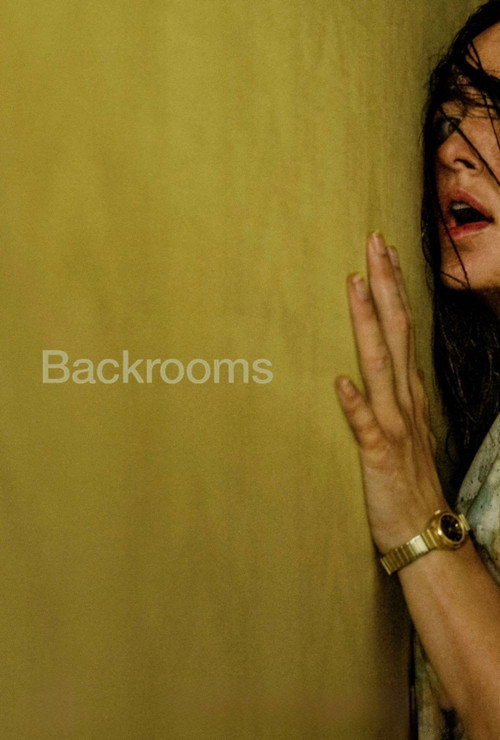
The 2026 theatrical Backrooms film draws from the mythology’s established framework while telling an original story. Here’s the specific relationship between the film and the community-built lore.
Level 0 Visual Fidelity
The film’s visual representation of Level 0 — the yellow carpet, the fluorescent lights, the infinite connected rooms — is among the most faithful to the original mythology’s specific aesthetic of any Backrooms content to reach theatrical scale. The production design team clearly prioritized getting the foundational visual right: this is exactly the space the 2019 image described, realized with the full budget of a theatrical production. Viewers who have spent years internalizing what Level 0 looks like from countless internet images and videos will find the film’s version meeting those specific expectations rather than substituting a more conventionally cinematic environment.
The Entity Approach
The film’s approach to entities is consistent with the mythology’s most effective creative principle: what you hear is more frightening than what you see. The specific sound design that opening-day audiences cited as the film’s most technically impressive achievement is a direct translation of the mythology’s entity logic to the theatrical medium — the things in the Backrooms that the original text warns you about hearing are realized through the theater’s surround sound system in ways that headphones, even good ones, can’t match. The film doesn’t show everything the mythology describes. It shows the right things and suggests the rest through sound.
Where to Watch the Backrooms Film
Backrooms is currently in theaters following its May 27, 2026 opening. A streaming window is expected approximately 45 to 60 days after theatrical release, placing the streaming premiere around mid to late July 2026. For viewers waiting for the streaming version alongside all major platforms in one subscription, TOP IPTV STREAM at topiptvstream.com provides all major streaming platform feeds through one plan with no geographic restrictions. According to Rotten Tomatoes, Backrooms has opened as the highest-rated horror adaptation of an internet mythology ever made.
Frequently Asked Questions About the Backrooms Mythology
How many levels does the Backrooms have?
The Backrooms mythology has no canonical maximum level count. The community wiki has documented hundreds of levels, and new levels continue to be contributed by community members. The earliest levels (0 through approximately 9) have the most established and widely accepted canon. Beyond that, different contributors have developed different levels with varying degrees of community acceptance. The mythology is explicitly collaborative and non-hierarchical, which means there’s no single authority on how many levels exist or what happens at the highest numbered ones.
What is noclipping and how does it work in the Backrooms mythology?
In the Backrooms mythology, “noclipping” refers to passing through a surface that should be solid — a wall, a floor, a boundary — and ending up in the Backrooms rather than on the other side of the surface. The term is borrowed from video game terminology: “noclip” is a cheat code that removes collision detection, allowing a player to move through walls. The mythology uses this term to describe the specific mechanism by which people accidentally enter the Backrooms — not through any intentional action but through some combination of circumstance, location, and possibly something about their specific physical or psychological state at the moment of transition.
Can you escape the Backrooms?
The mythology develops the concept of exits inconsistently across its many contributors. Level 0 has exits to higher levels but not reliably back to reality. Some levels have documented exit points that return wanderers to specific real-world locations. Others have no exits at all. The mythology’s most consistent position is that escaping the Backrooms is possible but requires specific knowledge that most wanderers don’t have when they arrive, and that the process of acquiring that knowledge is itself extremely dangerous. According to JustWatch, the Backrooms film is currently in global theatrical release with streaming availability coming in mid-July 2026.
What is the “no-clipping” experience described in the original Backrooms post?
The original 2019 post describes noclipping as an accidental experience rather than a deliberate action — something that happens to people who are “not careful” in “the wrong areas.” The mythology never fully defines what makes an area wrong for noclipping or what carelessness looks like in this context, which is part of its specific effectiveness as a horror premise: you can’t know in advance which surface you might fall through. The paranoia this generates — the specific anxiety about whether any surface is actually solid — is one of the mythology’s most effective psychological contributions to its audience.
Final Thoughts: The Backrooms Mythology Is the Most Complete Horror Universe the Internet Has Ever Built
The Backrooms mythology is what happens when a single, perfect horror concept meets a creative community with the specific skills and the specific collaborative instinct to build something far larger than any single creator could build alone. Seven years of community development produced a fictional universe with hundreds of levels, dozens of catalogued entities, an internally consistent physics, and a survival literature that treats the mythology with the seriousness of a real survival manual. The 2026 theatrical film took that universe and delivered it at a scale that the community’s contributions — brilliant as the best of them are — could only approximate.
The film is in theaters now. The mythology is on the Backrooms Wiki, across YouTube, across Reddit, and wherever internet horror culture has been building things for the past seven years. Start with the film for the theatrical experience. Then go deeper. The mythology rewards it. For the film on streaming when it arrives alongside every other major platform in one global subscription, visit topiptvstream.com and see what TOP IPTV STREAM covers. Don’t noclip. But if you do — know where you’ve landed.