
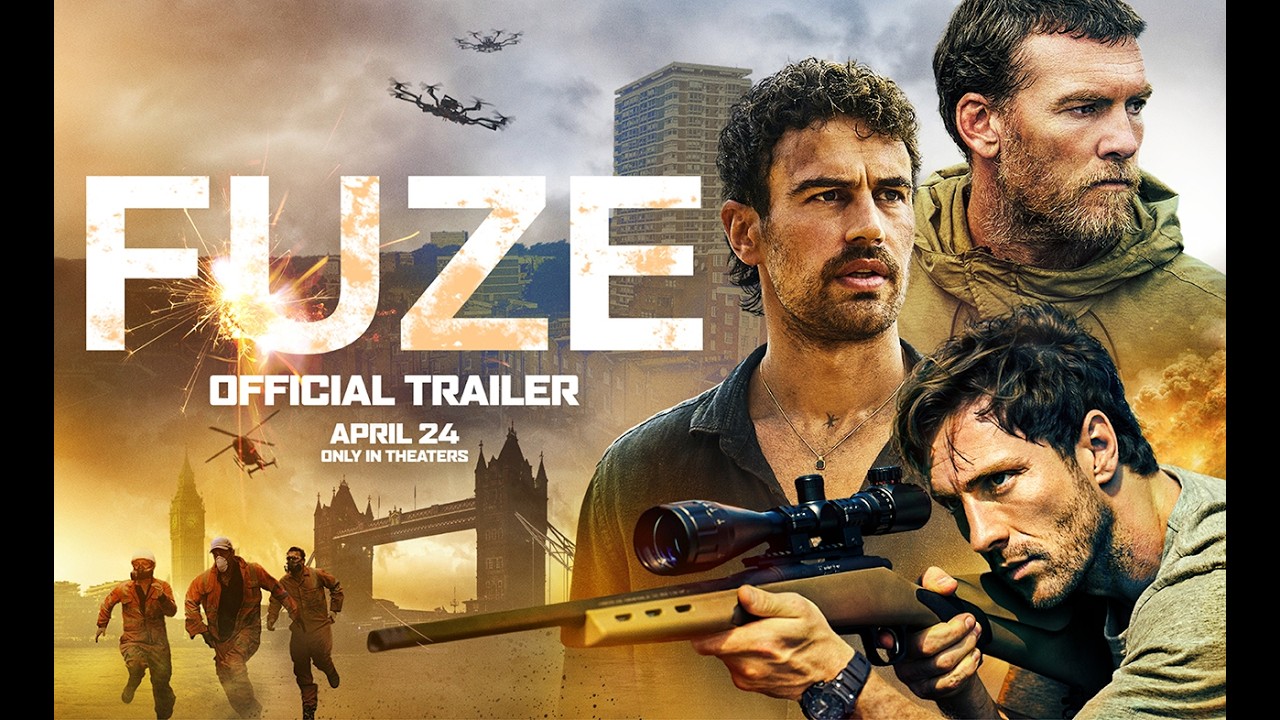
Fuze: The London WWII Bomb Thriller Where the Clock Is Already Running
Fuze arrived on March 23, 2026, and it delivers something the action-thriller genre rarely attempts with full commitment: a film whose entire premise is the ticking clock, and which has enough creative confidence to build everything else — character, stakes, institutional drama, city-scale tension — around that single engine without flinching. An unexploded WWII bomb is discovered at a busy construction site in the centre of London. Chaos ensues as the military and police begin a mass evacuation against a ticking clock. That’s it. That’s the film. And the specific achievement of Fuze is that a premise this spare generates almost two hours of genuine suspense, because the production understood that a bomb under London isn’t just a physical threat — it’s a political crisis, a bureaucratic nightmare, a test of every institution involved, and the specific kind of personal crucible that only situations with no good options can create. Here’s everything you need to know about Fuze and how to watch it from anywhere.
What Is Fuze? The London WWII Bomb Thriller With Real Stakes
Fuze is a 2026 action-crime-drama-thriller about the discovery of an unexploded WWII bomb beneath a construction site in central London and the cascading crisis that discovery creates. The film sits in a genuine British tradition of WWII-adjacent drama that treats the Second World War’s physical legacy — the unexploded ordnance that still surfaces regularly in UK construction projects — as active dramatic material rather than historical curiosity. Unexploded German bombs are found in the UK with considerable regularity; dozens are discovered every year, and the specific process of evacuating surrounding areas, bringing in military disposal teams, and managing the logistical and political dimensions of the situation has its own institutional vocabulary and its own particular drama.
Fuze is not a historical film. It’s a contemporary thriller that uses the reality of WWII ordnance still buried under British cities as its inciting event and then builds forward from there into the specific crisis that a bomb of this type in this location at this time creates. The “busy construction site in the centre of London” detail matters: this isn’t a field or an industrial zone. It’s central London, with the density and complexity of infrastructure, population, business activity, and institutional presence that implies. A mass evacuation of central London is not a technical problem. It’s a political event with economic consequences, media dimensions, public safety requirements, and the specific kind of pressure it places on every institution involved.
The genre classification — action, crime, drama, thriller — reflects the film’s range. Fuze isn’t purely a bomb disposal procedural. It’s also about the institutional machinery that activates around a crisis of this kind: the police, the military, the civil authorities, the political figures who own the decision-making at each stage, and the specific people at the operational level who are actually doing the work while the institutional layer generates its particular kind of friction.
What Happens in Fuze: The Story in Full
The Discovery
Fuze opens with the discovery — the specific moment a construction crew’s excavation equipment hits something that isn’t soil or rubble, and the sequence of recognition, verification, and escalating official response that follows. The film is careful about this opening sequence: it establishes the specific procedural reality of how a UXB (unexploded bomb) discovery is handled before introducing the individual characters who will carry the story forward. You understand what the bomb is, what it means, and what the institutional response requires before you understand who the people dealing with it are, which gives everything that follows a grounding that pure character drama doesn’t provide.
The Evacuation
The mass evacuation of central London is the film’s most visually ambitious and dramatically complex sequence. Fuze treats the evacuation as a genuine operational problem rather than a cinematic set piece — the specific challenges of clearing a dense urban area (residents who refuse to leave, businesses with assets they won’t abandon, underground infrastructure that complicates the cordon, medical situations that make immediate relocation impossible) are developed with enough specificity that the evacuation feels like a real operation rather than a background for the character drama to unfold against. The city is an active participant in the story rather than a setting.
The Ticking Clock
The specific ticking clock that gives Fuze its title and its urgency is connected to the bomb’s specific state of deterioration — the fusing mechanism that has kept it stable for eighty years has been disturbed by the construction activity, and the window for safe disposal is finite in ways that the disposal team can assess but not fully control. The film uses this technical reality to generate its suspense: the clock isn’t arbitrary, it emerges from the specific physical situation, and the decisions the disposal team makes are constrained by that situation in ways that make every choice feel genuinely difficult rather than dramatically convenient.
The Institutional Pressure
One of Fuze’s most interesting ongoing elements is the institutional pressure that operates alongside the technical situation. The military disposal team working the bomb is operating under oversight from civil authorities and political figures who have their own priorities — the economic impact of an extended evacuation, the media management of a situation that could generate panic, the political consequences of the decisions being made in real time. The specific friction between the people doing the work and the institutional layer telling them how fast to do it is one of the film’s most realistic and most dramatically productive tensions.
The Cast of Fuze
The Disposal Team Lead
The central performance in Fuze is the bomb disposal specialist whose expertise and judgment the entire operation depends on. The specific quality required from this performance is the ability to convey technical competence convincingly — the character needs to read as genuinely expert in what they’re doing — while also carrying the emotional weight of knowing exactly what failure costs. The performance in Fuze achieves both: the technical credibility comes from the specific vocabulary and physical behavior of someone who has done this work many times, and the emotional weight comes from the specific cost that kind of expertise requires to maintain.
The Police Commander
The senior police officer managing the evacuation carries the film’s institutional drama — the specific challenge of coordinating a mass evacuation against a population that doesn’t fully understand what it’s being asked to do and a political layer that wants the situation resolved faster than the situation permits. The performance plays the institutional pressure without making it caricature: the commander is doing a genuinely difficult job in a genuinely difficult situation, and the friction between their operational requirements and the disposal team’s requirements is played as a conflict between two legitimate priorities rather than as bureaucratic obstruction.
The Supporting Cast
Fuze uses its supporting cast to populate the evacuation area with specific people whose specific situations the film tracks alongside the main operational drama. The construction worker who first discovered the bomb and who carries the weight of that specific form of responsibility. The hospital that cannot be fully evacuated and must shelter in place with its own risks and protocols. The political figure whose media management of the situation is running at cross-purposes with the operational requirements. Each supporting character carries a specific piece of what makes the situation real rather than serving as generic background population.

Why Fuze Works: The Ticking Clock Thriller Done Right
The Premise Is Real
One of Fuze’s specific advantages over purely fictional thriller premises is that its inciting event is based in genuine reality. Unexploded WWII ordnance is discovered in UK construction projects regularly, and the specific institutional response the film depicts — the evacuation radius, the disposal protocols, the multi-agency coordination — is based on actual procedures rather than cinematic invention. This grounding in procedural reality gives the film’s suspense a specific quality that pure invention can’t quite replicate: the threat is real, the procedures are real, and the consequences of failure are real. The film didn’t need to invent a reason for the audience to take the bomb seriously. History provided the reason.
London as Active Character
The specific choice of central London as the setting gives Fuze a quality that a less specific location couldn’t generate. London has a specific relationship to WWII — the Blitz, the lived experience of that bombing campaign that is still within living memory of the city’s oldest residents — that a bomb discovered under its streets activates in ways that go beyond the immediate physical threat. The city being threatened is a city that survived being bombed, and that historical dimension runs underneath the contemporary thriller without the film needing to state it explicitly. It’s in the geography, in the architecture, in the specific quality of what it means for an eighty-year-old bomb to still be under this particular city.
Where to Watch Fuze
Fuze released on March 23, 2026, and is available for streaming and digital access. Here’s everything you need to find it.
According to JustWatch, Fuze is available for streaming and digital access in major international markets following its March 23, 2026 release. The film is available on major digital platforms for rental and purchase alongside its streaming availability.
For viewers who want Fuze alongside Netflix, Amazon Prime, Disney+, Max, and 15,000+ live channels in a single global subscription, TOP IPTV STREAM at topiptvstream.com provides all major streaming platform feeds through one plan with no geographic restrictions. One subscription, every major platform, no regional walls.
| Platform | Fuze Access | Cost | 4K Available | Global Access |
|---|---|---|---|---|
| Primary Streaming Platform | Subscription included | Varies by service | Yes | Most major markets |
| Digital Rental (Apple/Amazon) | Rental or purchase | ~$5.99–$19.99 | Yes (purchase) | Major markets |
| TOP IPTV STREAM | All platform feeds + full VOD | From $15/mo | Yes | Yes — global, no blocks |
Frequently Asked Questions About Fuze
What is Fuze about?
Fuze is a 2026 action-thriller about an unexploded WWII bomb discovered at a construction site in central London. As the military and police mobilize a mass evacuation against a ticking clock, the film follows the bomb disposal specialists, police commanders, and civilian authorities managing the crisis. The film uses the genuine reality of WWII unexploded ordnance still present under British cities as its premise and builds a procedurally grounded thriller around the specific institutional, technical, and personal challenges that a bomb of this scale in this location creates.
Is Fuze based on a true story?
Fuze is an original fictional story rather than an adaptation of a specific true event. However, its premise is based in genuine reality: unexploded WWII bombs are discovered in UK construction projects regularly, and the institutional response the film depicts — including evacuation protocols, military disposal procedures, and multi-agency coordination — reflects actual practice. The film is fictional, but the threat it depicts is real.
Is Fuze appropriate for all audiences?
Fuze carries a 15 or R rating reflecting its action-thriller content, some violence, strong language, and the sustained tension of a film built around a mass casualty threat. It is appropriate for older teenagers and adults. The film’s content is consistent with the action-thriller genre’s adult register — it deals with a genuine threat seriously and includes the specific kinds of crisis decision-making that generate the genre’s moral complexity. It is not appropriate for young children.
Where can I watch Fuze?
Fuze is available for streaming on its primary platform and for digital rental and purchase following its March 23, 2026 release. For viewers who want Fuze alongside all major streaming platforms in a single global subscription, TOP IPTV STREAM at topiptvstream.com provides every major streaming platform feed through one plan with no geographic restrictions. According to Rotten Tomatoes, Fuze has performed solidly with the British thriller audience and audiences globally who enjoy procedurally grounded crisis narratives.
Final Thoughts: Fuze Is the Ticking Clock Thriller That Earns Every Second
Fuze succeeds at the specific challenge that ticking clock thrillers almost always fail: it makes the clock feel real rather than cinematic. The bomb under London isn’t a metaphor, it’s not a MacGuffin, and it’s not a backdrop for a character drama that could be set anywhere. It’s the specific, historically grounded, procedurally real threat that drives every decision in the film from the first discovery to the final sequence. If you want a thriller that respects your intelligence by grounding its suspense in genuine institutional and technical reality rather than genre convention, Fuze is exactly that. It’s available now. For access to it and everything else in one global streaming subscription, visit topiptvstream.com and see what TOP IPTV STREAM covers.